The inevitable gut questions
A new patient sits across the desk. They have come in seeking relief for a stubborn patch of eczema, or perhaps chronic tension headaches that strike every afternoon. Fifteen minutes into the consultation, they look mildly exasperated. "Doctor, why are you asking if I feel bloated after eating dal? I told you, I am here for my skin."
This happens in clinics across the country every single week. In conventional medicine, you take a skin problem to a dermatologist, who looks at the skin. You take a headache to a neurologist, who looks at the head. But when you sit down with a homeopath, we want to know if your stool is hard, if you crave spicy food, and if you feel heavy and lethargic after a bowl of rice.
We ask these questions because the digestive tract is not just a tube that processes lunch. It is the root system of your constitutional health. In homeopathic philosophy, a skin eruption or a chronic migraine is rarely viewed as an isolated local event. It is an outward expression of an internal imbalance. More often than not, that imbalance begins in the gut.
The skin and mood connections
Your body has primary channels for eliminating waste: the bowels and the urinary system. When digestion is sluggish and constipation becomes a daily reality, those primary channels are compromised. The body, being highly intelligent, finds alternative routes to push out waste. The skin is the largest elimination organ we have. When a patient presents with adult acne, boils, or eczema, a homeopath immediately looks at liver function and bowel regularity. Fix the constipation, and the skin often begins to clear on its own.
Then there is the mood. Anyone who suffers from severe acidity knows the intense irritability that comes with it. You cannot feel mentally light when you feel physically heavy. A swollen, gas-filled abdomen directly impacts your breathing and your temper. When patients report anxiety, brain fog, or persistent low moods, evaluating their ability to break down and absorb nutrients is a necessary first step.
Matching the remedy to the digestion
Because homeopathy treats the individual rather than a disease label, there is no single remedy for "bad digestion". The specific details of how your gut malfunctions dictate the prescription.
We often consider Nux Vomica for a very specific lifestyle pattern. This is traditionally indicated for the person who works long hours, sits at a desk all day, and relies heavily on tea or coffee to stay alert. They might endure a long two-wheeler commute through heavy evening traffic, eat a heavy dinner at 10:30 PM, and go straight to bed. They wake up with a sour stomach and a constant, frustrating feeling that they have not completely finished passing stool.
Lycopodium presents an entirely different symptom picture. Here, the patient often feels ravenously hungry when they sit down to eat. But after just two or three bites of roti, they feel completely full. The bloating sits low in the abdomen, usually worsening between 4 PM and 8 PM. These patients typically have a powerful craving for hot food and warm sweets after their meals.
A homeopath may think of Pulsatilla for the person whose digestion collapses completely after eating rich, greasy foods. A heavy wedding buffet with malai kofta and pooris leaves them feeling sick, with a thick white coating on their tongue. Curiously, despite feeling terrible, they experience almost zero thirst for water.
Carbo Veg is classically prescribed when digestion has become entirely sluggish. The patient feels that everything they eat, no matter how plain, turns into gas. The bloating sits high up in the upper abdomen, forcing them to loosen their clothing. They often feel breathless with the bloating and desperately want a fan blowing directly on them.
The Indian diet and the raw materials of healing
A homeopathic remedy provides a stimulus to the body, but it does not supply raw materials. Food does that. You cannot out-prescribe a diet that constantly inflames the gut.
We live in a culture with a heavy dietary reliance on wheat, dairy, and refined seed oils. While traditional Indian cooking contains immense wisdom for gut health, modern eating habits have skewed heavily towards processed variations. To support homeopathic treatment, certain dietary habits usually need adjustment.
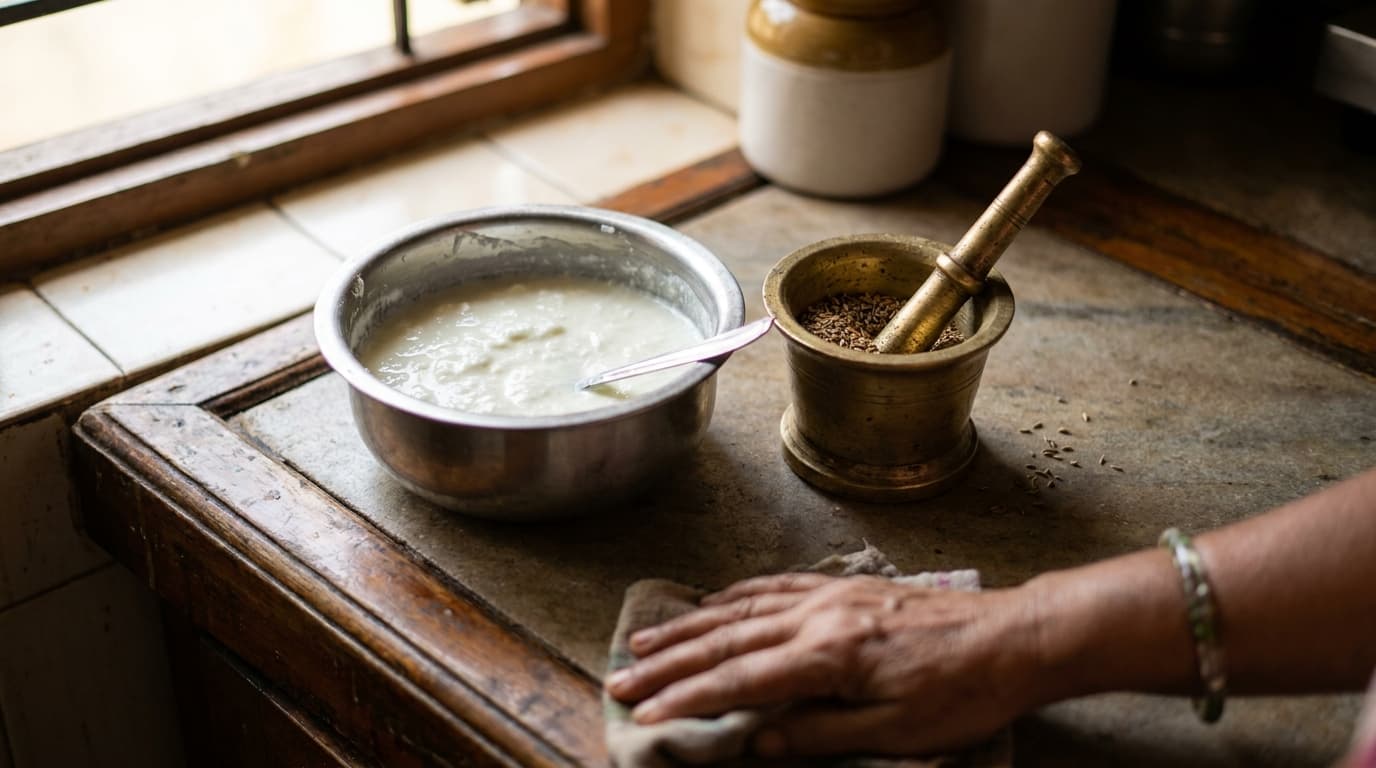
- Respecting the spices: Traditional tempering (tadka) is not just for flavour. Adding ajwain (carom seeds) and hing (asafoetida) to heavy dals or kidney beans physically changes how they digest, reducing the gas that leads to bloating.
- Rethinking dairy: Many adults lose the ability to easily digest heavy milk as they age. However, fermented dairy like homemade chaas (buttermilk) or fresh dahi (curd) introduces natural probiotics that actively soothe an inflamed stomach lining.
- The dinner timeline: Eating a massive meal of rice and thick gravy right before lying down guarantees acid reflux. The oesophageal sphincter cannot handle a full stomach lying horizontal. Moving dinner two hours earlier often does half the work of an antacid.
- Bitter over sweet: We have largely bred bitter flavours out of our daily meals, but bitter foods stimulate bile production and liver function. Incorporating methi (fenugreek) leaves, bitter gourd, or simply chewing a few fennel seeds after meals aids the breakdown of fats.
Timelines and realistic expectations
Rebuilding gut health is slow work. If you have been relying on over-the-counter antacids from the local chemist for ten years, your stomach acid production is fundamentally altered. A constitutional homeopathic course for chronic irritable bowel symptoms or long-standing acid reflux might run for four to six months.
There are also clear limits. If you are passing black, tarry stools, experiencing sudden and unexplained weight loss, or having difficulty swallowing food, these are red flag symptoms. They require urgent conventional medical investigation, often an endoscopy or colonoscopy, to rule out ulcers, blockages, or severe pathology. Homeopathy is a deeply supportive system of medicine, but structural emergencies require immediate allopathic diagnostics.
Getting the right support
Dealing with chronic digestive issues makes travel incredibly stressful. When you cannot trust your own bowels, or when you are crippled by severe bloating, sitting for an hour in a crowded clinic waiting room is an anxious experience. This is where Hello Homeo offers a practical solution. You can book video teleconsultations with qualified homeopathic doctors, allowing you to discuss detailed, sometimes embarrassing digestive symptoms in complete privacy from your own home.
Healing a chronic condition requires looking at the foundation. Before we can permanently resolve a migraine, calm an autoimmune flare, or clear up the skin, we have to look at how your body processes the world it takes in. Finding the right remedy requires a complete, honest picture of what happens after you swallow your food.