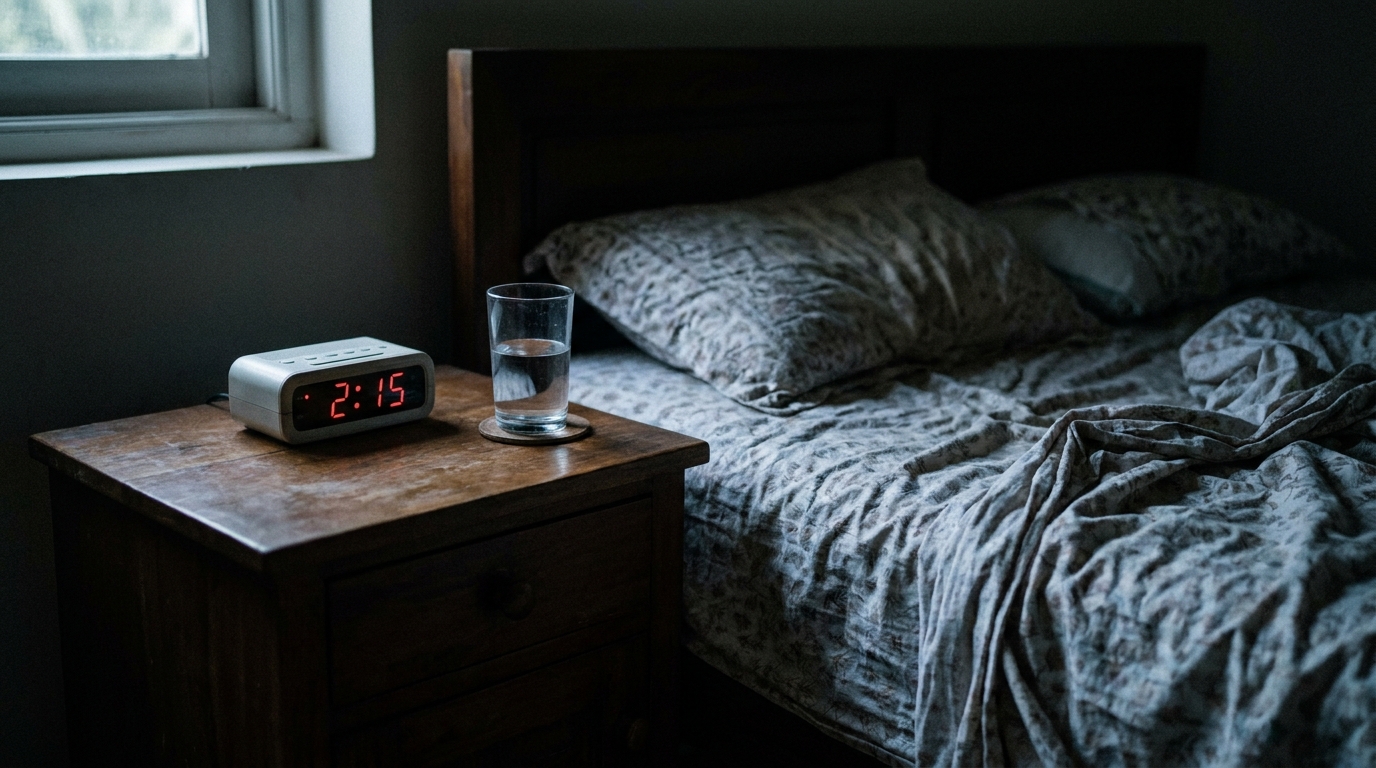
The sharp elbow in the ribs at 2 AM is usually how we handle snoring in most households. Or someone takes their pillow and quietly moves to the living room sofa. We treat the noise as a nuisance, something to joke about over breakfast. But if you're the one making the noise, or the one lying awake listening to the sudden, terrifying pauses in your spouse's breath, you already know it isn't funny.
Snoring happens when the tissues at the back of your throat relax too much while you sleep. As you pull air in, those floppy tissues vibrate. That vibration is the sound keeping the house awake. If the tissues relax so much that they completely block the airway for a few seconds, that is sleep apnoea. Your brain panics from the lack of oxygen and jolts you slightly awake to tighten the throat muscles. You take a sudden, gasping breath and fall right back asleep. This cycle can repeat dozens of times an hour. You wake up exhausted, dry-mouthed, and with a dull morning headache, wondering why eight hours in bed feels like two.
The mechanics of a blocked airway
In the clinic, I see a few specific triggers behind this issue constantly. One of the biggest is how we eat. Eating a heavy dinner of rice, heavy dals, or spicy curries at 9:30 PM means you're lying down flat while your stomach is still entirely full. This pushes stomach acid up into the throat. It causes a silent acid reflux that inflames and swells the delicate airway tissues, making them vibrate much more easily.
Then there is the chronic dust of our cities. So many patients live with perpetually blocked noses from environmental allergies. If you can't breathe through your nose, you are forced to breathe through your mouth. When your mouth opens during sleep, your jaw drops back, taking your tongue with it. The base of the tongue directly blocks the upper airway.
There is a dangerous misconception that a loud snorer is just sleeping very deeply. The exact opposite is true. A person with obstructive sleep apnoea is constantly hovering on the edge of waking up because they are literally fighting for air. Left untreated over the years, this constant nightly stress drives up blood pressure, puts an enormous strain on the heart, and severely messes with blood sugar regulation. It also causes severe daytime fatigue. If you are feeling dangerously drowsy while waiting at traffic lights on your two-wheeler commute, your nighttime breathing needs immediate investigation.
When conventional medicine is necessary
This is where we need to draw a hard clinical line. If a sleep study shows you have moderate to severe Obstructive Sleep Apnoea (OSA), you need conventional medical intervention. Usually, this means using a CPAP machine at night to continuously push air into your nose and keep the throat physically open.
Do not rely entirely on homeopathic medicines to fix severe, oxygen-depriving apnoea. Homeopathy acts as a highly effective supportive care alongside these machines. It focuses on the underlying mucosal irritations, chronic allergies, and poor tissue tone that make the obstruction worse in the first place, but it doesn't replace the immediate mechanical need for oxygen to the brain.
Remedies for the root cause
When a patient comes in for snoring, a homeopath doesn't just look for a generic anti-snoring drop. We look at the anatomy and the specific physical habits causing the blockage.
Take Opium, for example. In homeopathy, this is traditionally indicated for deep, heavy, rattling snoring where the patient is extremely difficult to wake. The breathing is highly irregular, and the face often looks flushed or dark red. We frequently consider this when the sleep apnoea picture is very pronounced, with obvious breath-holding and sudden, frightening gasps.
If the snoring is tied to chronic nasal congestion, a homeopath might think of Lemna Minor. This remedy is classically prescribed when nasal polyps or severely swollen turbinates block the nose entirely. The patient complains of a foul taste in the mouth in the morning and a nose that simply never clears. This gets particularly bad during the humid monsoon months when airborne mould and dampness heavily irritate the nasal lining. By helping reduce the swelling in the nasal passages, we naturally encourage the patient to return to nose breathing over mouth breathing.
Lachesis fits a very specific, distressing pattern. The patient falls asleep but almost immediately wakes up choking or gasping for air. They often can't tolerate anything tight around their neck—they will literally pull at the collars of their nightclothes. The tissues of the throat are highly sensitive, and the apnoea episodes tend to happen just as they transition into deep sleep.
Then we have Nux Vomica. I prescribe this constantly for the classic stressed professional. This is the person who works late, eats heavy meals right before bed, and perhaps relies on a peg of whiskey or strong tea to manage their evening stress. They have sluggish digestion, noticeable acid reflux, and sleep that is entirely restless despite their loud snoring. The medicine may help settle the gastric irritation that causes the throat tissues to swell overnight.
If a patient is deeply lethargic, feels the cold terribly, and carries excess flabby weight around the neck and chest, a homeopath may consider Calcarea Carbonica. This constitutional remedy helps improve general metabolism and tissue tone in patients who get breathless easily and sweat heavily on their head while sleeping.
The physical reality of the airway
Medicine alone is rarely enough. If you carry excess weight around your neck—a collar size over 16 inches for women or 17 inches for men—that fat physically presses down on your windpipe the second you lie on your back. Losing even three or four kilos can dramatically change the severity of the snoring by reducing that physical pressure.
Sleeping on your side rather than your back is another immediate, mechanical fix. Sometimes we ask patients to sew a tennis ball into the back pocket of an old sleep shirt. It sounds a bit ridiculous, but it completely stops you from rolling onto your back in your sleep.
Treating sleep issues requires real patience. A constitutional homeopathic prescription looks at your digestion, your daily stress levels, your weight, and your respiratory health all at once. It takes time to reduce chronic tissue inflammation in the throat. If you're struggling with poor sleep and constant daytime fatigue, booking a video teleconsultation through Hello Homeo allows a doctor to take a full, detailed case history without you needing to travel, and their follow-up tracking makes it easier to monitor whether your morning exhaustion is genuinely improving month by month.
A quiet night's sleep is not a luxury. It's a biological necessity for your heart and your brain to repair themselves. If you or your spouse are noticing the sudden silences of apnoea followed by choking gasps, talk to a doctor. Get a sleep study done if they advise it. And work with a qualified homeopath to address the underlying irritations and allergies making your airway vulnerable in the first place. You will be surprised how much better the days feel when the nights actually involve resting.