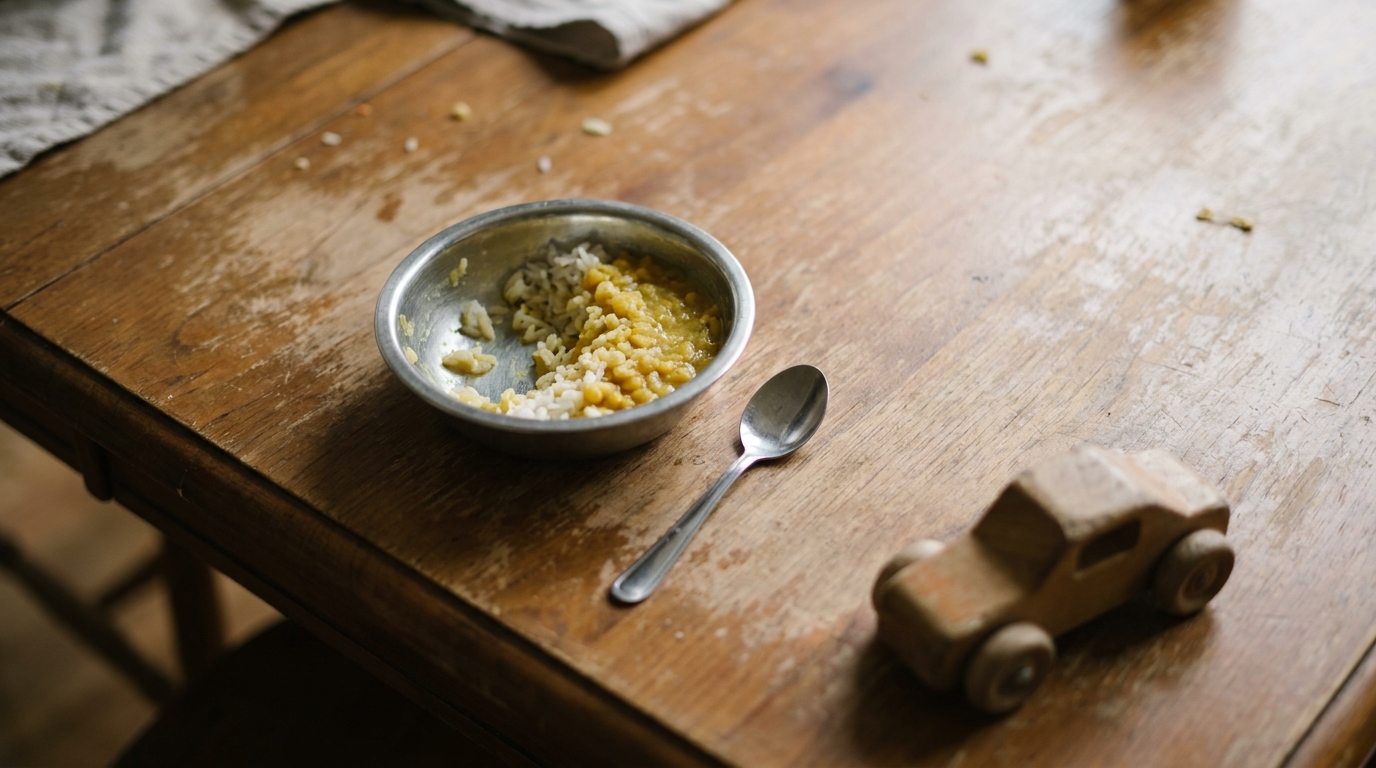
The dinner table battleground
You know the scene well. A bowl of dal-chawal sits growing cold on the table. The child turns their head away, mouth clamped tightly shut. A grandmother suggests adding another spoonful of ghee, while the mother feels a familiar knot of anxiety tightening in her stomach. This anxiety usually peaks in a paediatrician's office, watching a pen trace a line on a growth chart that dips from the 50th percentile down to the 15th, or lower.
In many Indian families, a chubby child is universally viewed as a healthy child. The pressure on parents—particularly mothers in joint families—to plump up a lean child is immense. This leads to a cycle of forced feeding, tears, and a growing stack of appetite-stimulating syrups bought over the counter from the local chemist.
As a homeopath, I see this dynamic constantly. Parents arrive exhausted, asking for a tonic to make their child eat. But homeopathy does not work by artificially spiking hunger. We have to look at why the child is failing to thrive in the first place.
Ruling out the obvious first
Before we even discuss homeopathic remedies, we have to look for physical roadblocks. A child who is not growing needs investigation, not just observation. We cannot assume they are simply a fussy eater when there might be a physiological reason their body is rejecting or failing to absorb food.
- Worms and parasites: Incredibly common in India, especially after the monsoon when children are playing outdoors or if water sources are compromised. A simple stool test is necessary.
- Iron deficiency anaemia: Low iron kills the appetite. It creates a vicious cycle where the child won't eat because they are anaemic, and they remain anaemic because they won't eat.
- Coeliac disease and allergies: With wheat being a staple of the North Indian diet—present in every roti, paratha, and biscuit—an intolerance to gluten will severely stunt growth. If the gut lining is inflamed, the body cannot absorb nutrients, no matter how much paneer or milk you feed them.
- Chronic infections: Recurrent urinary tract infections or low-grade respiratory issues force the body to use all its energy fighting illness rather than building tissue.
If a child is severely malnourished, completely lethargic, or losing weight rapidly, this is a medical emergency requiring immediate allopathic paediatric care. Homeopathy is a supportive system of medicine for chronic, constitutional issues, not a substitute for acute emergency intervention.
Assimilation over intake
Once we have ruled out severe pathology or active infections, we look at assimilation. This is where constitutional homeopathy shines.
You can pour a litre of water into a bucket, but if the bucket has a hole, it will never fill. Similarly, you can feed a child a highly nutritious diet, but if their digestive fire is weak and their metabolic processes are sluggish, those nutrients pass straight through. They might suffer from chronic constipation, or they might pass undigested food in their stool.
A homeopath spends a long time taking the case to understand the child's entire physical and emotional makeup. We want to know how they sleep, whether they sweat profusely on their head at night, if they are timid or obstinate, and what their cravings are. These odd, individual details point us toward the correct constitutional remedy.
Classic constitutional profiles
There is no single remedy for weight gain. A homeopath prescribes based on the whole picture of the child. Here are a few remedies classically indicated for children who struggle to thrive, to show you how specific the symptom pictures can be.
The sluggish metabolism
Calcarea Carbonica is often considered when a child is actually quite flabby but lacks muscle tone and stamina. They might have been late to crawl or walk. These children tend to sweat heavily on the back of the neck while sleeping, wetting the pillow. They often crave strange things like chalk or raw potatoes, and they catch colds very easily. Their poor growth is an issue of a sluggish, inefficient metabolism.
The frail and obstinate child
A homeopath may consider Silicea for a child who is highly refined, physically frail, and deeply stubborn. These children are usually very sensitive to cold air and suffer from recurrent infections, taking a long time to clear a simple cough. They might eat a fair amount, but they remain extremely thin because their body simply does not assimilate the nutrition. Their sweat often has a distinctly sour smell.
Delayed development and glands
Baryta Carbonica is traditionally indicated for children who are delayed both physically and mentally. They might struggle to grasp concepts at school and are often extremely shy, hiding behind their parents in the clinic. A key physical indicator for this remedy is recurrent tonsillitis; every time they get a cold, their glands swell up, making swallowing painful and further reducing their willingness to eat.
The irritable worm picture
When a child is losing weight despite having a ravenous appetite, Cina is frequently indicated. This is a classic remedy for worm infestations and the digestive irritation they cause. The child is typically in a terrible mood—screaming, throwing tantrums, and refusing to be touched or even looked at. They might grind their teeth loudly in their sleep and constantly rub or pick at their nose.
The frequent respiratory sufferer
Tuberculinum is a deep-acting constitutional remedy often used when there is a strong family history of respiratory illnesses. The child is typically very thin and narrow-chested, catching a new cold with every slight shift in the weather. They are often restless, constantly wanting to move or travel, and they fail to put on weight no matter how much they consume.
The psychology of the fussy eater
Beyond the physical remedies, we have to look at the feeding environment. Toddlers are naturally suspicious of new textures. If every meal is a high-stress event with a parent hovering with a spoon, demanding the plate be cleared, the child will associate food with tension.
Sometimes the most effective intervention is backing off. Offering small, frequent meals without pressure, changing the texture of the food, and allowing the child to feed themselves—even if half the rice ends up on the floor—can break the cycle of refusal.
Managing this requires patience, which is difficult when you are anxious about their health. For parents who find clinic visits stressful, especially trying to manage a cranky, uncooperative toddler in a waiting room full of coughing adults, Hello Homeo provides online video teleconsultation, allowing the doctor to observe the child in their own relaxed home environment and issuing digital prescriptions directly to your phone.
What to expect from treatment
Parents often want to know how long it will take for their child to jump up a percentile line. The honest answer is that constitutional treatment is slow. You are attempting to correct a fundamental metabolic rhythm, not applying a temporary patch.
A typical course of treatment needs three to six months before you see a structural shift in the growth chart. However, you will usually see other signs of improvement much sooner. Within the first few weeks of the correct remedy, parents often report that the child is sleeping deeper, their bowel movements have regularised, and their general mood has brightened.
Appetite usually improves next. Weight gain is the final piece of the puzzle to fall into place. It requires consistency, realistic expectations, and regular follow-ups with your homeopath to adjust the potency of the remedy as the child begins to thrive.