The phrase patients use most often is broken glass. The stool passes, the anus feels sliced, and for the next two hours sitting at a desk, riding pillion, even walking to the kitchen is miserable. So they do what seems sensible: they eat less, they put off the trip to the toilet, they clench. The next stool is drier and harder, and the tear opens again.
That loop is the whole problem. A fissure is a small split in the lining of the anal canal, usually just inside the opening and most often at the back. It's common enough that most adults have had a minor one at some point and never mentioned it to anyone. It becomes a medical issue when it stops healing, and it stops healing because of what happens around it.
Why a small cut lasts for months
Two things keep a fissure open. The first is the obvious one: a hard stool passing over the same spot every day, re-opening it before the new tissue has any strength. The second is less obvious and explains the intensity of the pain. The internal anal sphincter, a ring of muscle you can't consciously relax, goes into spasm when the fissure is there. That spasm pulls the edges of the wound apart and reduces blood flow to the area. Less blood means slower healing, and slower healing means more spasm.
This is why the pain is out of all proportion to the size of the injury. It's also why an acute fissure, seen early and with stool kept soft, usually settles in four to six weeks. One that's been there longer than six to eight weeks, with a little skin tag at its lower end, has become chronic and needs more patience.
The fibre you added may have made it worse
A familiar story: someone reads that fibre is the answer, adds a large raw salad, two spoons of isabgol and a bowl of dal, and finds the stool bigger, drier and more painful than before. Fibre only works when water goes with it. Psyllium husk in particular will absorb whatever fluid it can find and set into a firm gel. Take it in a small cup of water and it becomes a plug; take it in a full glass with another glass after, and it becomes the soft, slippery bulk that lets a fissure close.
Most Indian diets aren't as fibre-poor as people assume. Rice, roti, dal and vegetables all contribute. What's usually missing is fluid and movement. Two cups of tea and half a litre of water across a whole day, eight hours sitting in front of a screen, and a commute that involves no walking at all — that combination produces hard stool regardless of how much salad is on the plate.
What a homeopath asks before choosing anything
Prescribing here is not about the fissure. It's about the stool that keeps tearing it, and the person producing that stool. So the questions sound oddly wide: Is the stool dry and crumbly like goat droppings, or large and hard at the start and soft later? Is there an urge at all, or does nothing happen for three days? Do you feel unfinished after passing stool? What time of day is it worst? Does the pain burn for hours afterwards, or is it a sharp stab that fades? Is there bleeding, and is it bright red on the paper only?
Answers to those decide the remedy far more than the size of the tear does. Some of the pictures that come up repeatedly:
- Nux Vomica — the desk-and-commute patient. Irregular meals, coffee or tea on an empty stomach, frequent ineffectual urging, small stool, a feeling of never being done. The fissure usually comes with piles, and the person is irritable in a way everyone at home has noticed.
- Bryonia — large, dry, hard stool that needs real straining to pass, with thirst for big quantities of water and everything worse for movement.
- Alumina — no urge for days together, and even soft stool needs enormous effort to expel. The bowel seems to have forgotten its job.
- Lycopodium — bloating and distension, worse between 4 and 8 in the evening, hunger that disappears after a few bites, and a persistent sense of incomplete evacuation.
- Natrum Mur — dry, crumbly stool in someone who has been through a long stretch of grief or suppressed hurt, with cracked lips and a liking for salt.
- Sepia — a bearing-down sensation, a feeling of a ball in the rectum, incomplete stools, and a flat, worn-out indifference that the family notices before the patient does.
- Nitric acid — sharp, splinter-like pain during and after stool, bright bleeding, and a fissure that seems slow and offensive in its discharge. Classically worse in cold weather.
- Ratanhia — burning in the rectum for hours after passing stool, described by patients as though the passage is full of broken glass. One of the most frequently indicated remedies for fissure pain of this kind.
- Graphites and Silicea — for the chronic fissure that oozes a sticky or thin discharge, itches, or simply refuses to close. Both are traditionally considered when healing is slow.
Alongside the constitutional remedy, a warm sitz bath with a few drops of Calendula mother tincture in a basin of water, ten minutes once or twice a day, is a traditional way to keep the area clean and ease the spasm. Hypericum is often considered where the pain is sharply shooting rather than burning. None of this is a substitute for softening the stool.
The changes that actually decide the outcome
Water first. Two and a half to three litres a day, and more in a Chennai summer or a Delhi May. Keep a bottle at your desk and finish it, because intentions don't move bowels. Then the isabgol, if you're using it, at night in a full glass of water with another glass afterwards.
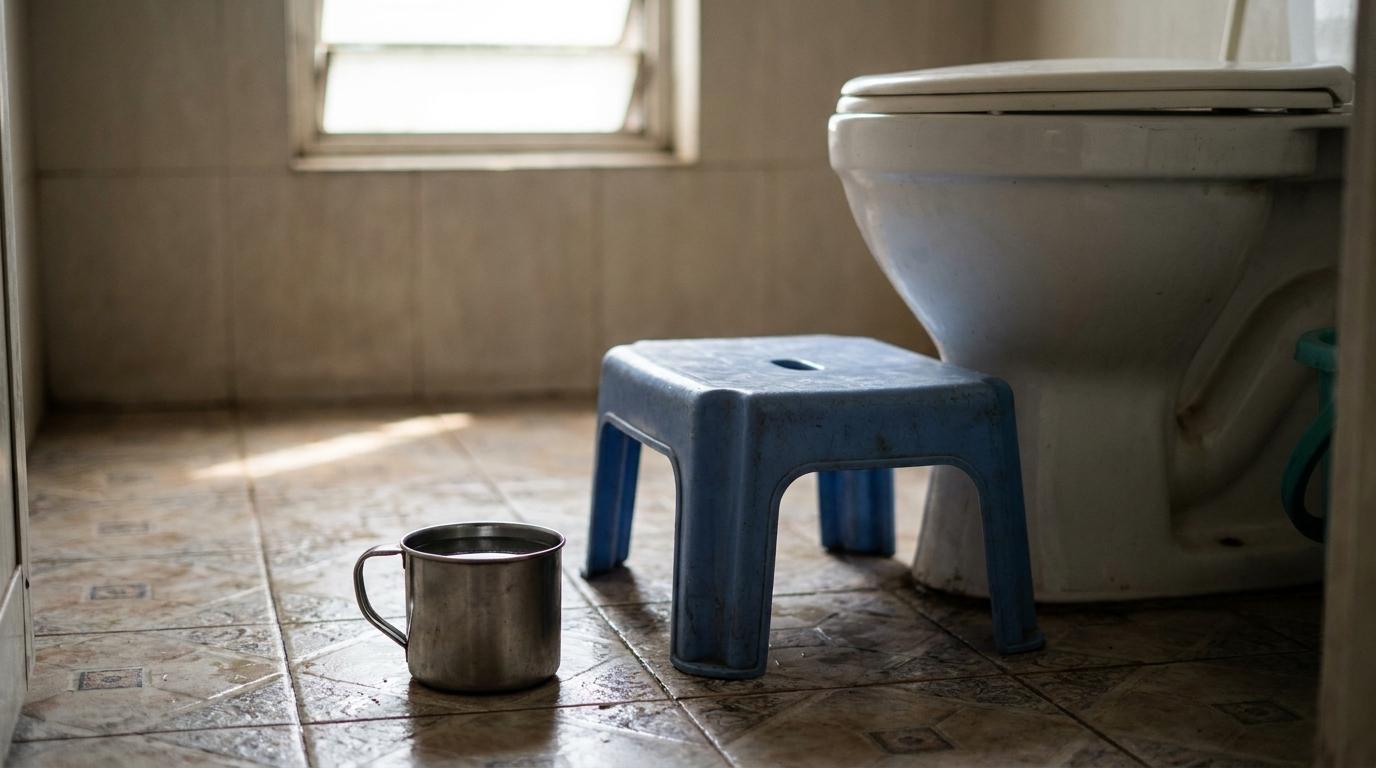
Next, posture. On a Western toilet, prop your feet on a low plastic stool so the knees come above the hips. That position straightens the angle between rectum and anal canal and lets stool out with far less pressure. Then the rule that patients hate and that matters most: ten minutes, no phone, no pushing. If nothing has happened, get up. Straining is what tears tissue.
Fix a time. Within an hour of waking, after a glass of warm water, sit for those ten minutes whether or not you feel an urge. The gut responds to routine, and a predictable morning movement is worth more than any single food. Add ghee to your roti, eat papaya and guava in season, soak a few raisins overnight, and cut the tea down to two cups. Walk thirty minutes — the long two-wheeler commute is not exercise.
When this needs a surgeon, not a remedy
Most fissures are benign and heal. Some aren't, and it's worth being blunt about the signs that need a proctology opinion quickly: bleeding that is dark or mixed through the stool rather than streaked on the surface, unexplained weight loss, anaemia, a change in bowel habit after the age of 45, a family history of colon cancer, fever or pus, more than one fissure, or a fissure sitting off to one side of the canal rather than at the back. That last one can point to Crohn's disease or, in India, to intestinal tuberculosis. A fissure that hasn't healed after eight weeks of genuinely soft stool also deserves examination rather than another remedy.
For chronic fissures, the surgical option — a small cut in the internal sphincter to relieve the spasm — has good success rates and shouldn't be treated as a last resort to be feared. Homeopathic treatment works alongside that decision, not instead of it.
Where homeopathy sits in all this is supportive. It doesn't replace water, fibre and a stool softener, and it won't close a fissure while the stool is still hard. What a constitutional remedy can reasonably aim for is a more regular, less laboured bowel habit over weeks and months, and less of the spasm-and-pain cycle that keeps re-opening the same tear. Courses run for months, not days, and progress is judged by the stool and the pain, not by how the remedy sounds. Hello Homeo is useful here in a practical way — a fissure makes a two-hour round trip to a clinic genuinely painful, so video teleconsultation with a homeopathic doctor avoids the journey, and follow-up tracking matters when the remedy has to be reviewed against a stool pattern that shifts slowly over a season.
Do see a qualified homeopath in person or online for your own case. The remedy depends on details no article can collect — your urge, your timing, your temperament, your history — and the wrong one, taken for a month, teaches you nothing except that homeopathy doesn't work.