The Physical Reality of Doomscrolling
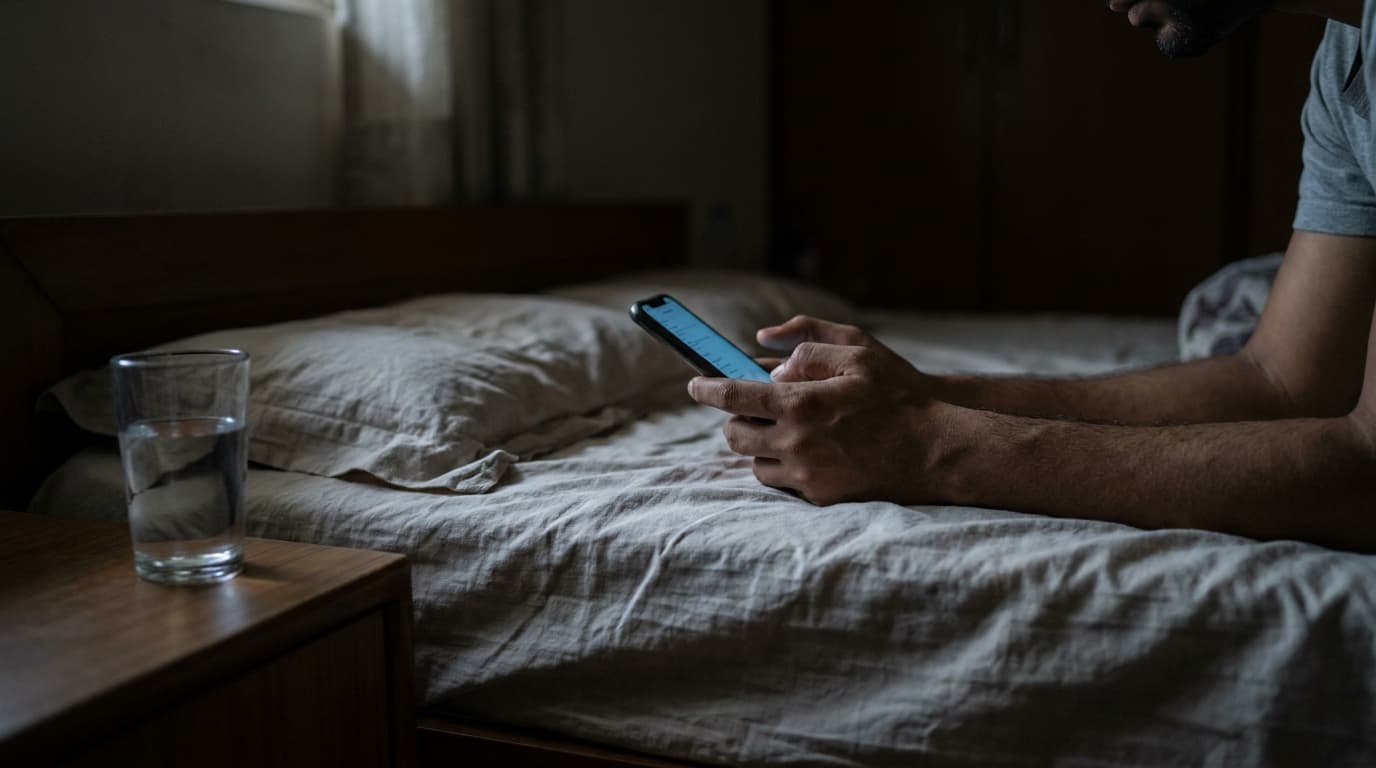
You know the feeling. It is 1:30 AM, and you are lying on your side in the dark. Your eyes are dry, your thumb is automatically flicking upward through short videos, and your brain feels like it is vibrating. You promised yourself you would sleep at 11. Now, your neck is stiff, your sleep window is gone, and you feel entirely hollowed out.
In my clinic, people rarely book an appointment saying they have a screen addiction. They come in complaining of chronic insomnia, tension headaches starting at the base of the skull, and a strange, buzzing exhaustion. They snap at their children after coming home from a two-hour commute through Bengaluru or Mumbai traffic, retreating to the sofa to stare at their phones instead of talking to their spouses. They call it stress. I look at their twitching eyelids and the way they check their lock screen four times in a ten-minute consultation, and I know exactly what is happening.
Digital burnout is a state of chronic nervous system hyper-arousal. Your brain is processing a relentless stream of micro-stimuli. Between the fifty-message pileups in the joint family WhatsApp group, urgent work emails, news alerts, and infinite feeds, your nervous system gets stuck in the 'on' position.
Revenge Bedtime Procrastination
Much of this behaviour is driven by what psychologists call revenge bedtime procrastination. When your entire day belongs to your boss, your commute, and your family obligations, the hours between 11 PM and 1 AM feel like the only time that belongs entirely to you. You stay up scrolling not because the content is actually interesting, but because you are desperate to reclaim a tiny sliver of personal time, even if it is junk time.
The physical toll is heavy. Staring at a fixed focal length for hours causes the eye muscles to spasm. The artificial blue light suppresses melatonin production, tricking your brain into thinking it is noon when it is actually midnight. Your posture collapses, putting immense strain on the cervical spine. Eventually, you reach a state where you are utterly exhausted, yet completely unable to relax.
How Homeopathy Approaches the Nervous System
Let me be clear. There is no homeopathic pill that will magically make you put your phone down. If you take a remedy and go right back to doomscrolling in a dark room, nothing will change. The screen is the maintaining cause of your symptoms, and you have to address it.
What homeopathy does is treat the physical and mental state of being wired and tired. When your nervous system is too overstimulated to let you rest, the right remedy helps dial down the internal static. It acts as a bridge, calming the hyper-arousal so your own willpower can actually take over and allow you to step away from the digital noise.
Remedies for Digital Overstimulation
Treating nervous exhaustion requires matching the exact way your burnout manifests with a specific remedy profile. Here are some remedies a homeopath may consider based on how your symptoms present.
Nux Vomica
This is classically prescribed for the highly stressed, overstimulated individual. This person works long hours, stares at a laptop all day, and spends their commute home scrolling on a smartphone. They rely on three or four cups of strong tea or coffee just to get through the afternoon. They are irritable, impatient, and easily snap at their family over minor things. The defining sleep pattern is falling asleep exhausted, waking up at 3 AM with their mind racing about work tasks, and tossing and turning until they finally fall asleep just before the alarm rings.
Coffea Cruda
I think of this remedy for the racing mind. The physical body is tired, but the brain is throwing a party. Thoughts tumble over each other in a rapid, uncontrollable stream. It is exactly the feeling of having drunk a massive cup of espresso right before bed, except the stimulant was an hour of rapid-fire video reels. The person tosses and turns, feeling wide awake and highly sensitive to any ambient noise in the house.
Argentum Nitricum
This is traditionally indicated when anxiety drives the screen use. This is the compulsive checker. They are refreshing news feeds, tracking grocery delivery apps minute by minute, and checking for messages before the notification even sounds. There is a deep, restless anticipation and a constant feeling of being hurried. They scroll because they feel anxious, and the scrolling simply feeds the anxiety.
Zincum Metallicum
When severe nervous exhaustion sets in, the nervous system often misfires physically. A homeopath might consider Zincum when there is an unbearable restlessness in the legs. You lie down after a long day of screen time, and your legs simply will not stop moving, twitching, and aching. The brain fog is thick, and the person feels entirely drained of vitality.
Ruta Graveolens
This addresses the purely physical toll of screen time. The eyes feel like balls of fire. There is a deep aching strain in the eye muscles from staring at a glowing rectangle for eight hours. Often, there is a dull, heavy headache that settles right above the eyebrows, worsening when trying to read small text on a screen.
Building Realistic Boundaries
A remedy works best when you remove the cause. If you tell an Indian professional to completely stop using WhatsApp, they will laugh you out of the room. It is how work happens, how the family communicates, and how life is organised. You need realistic boundaries, not a monk retreat.
- Create a one-hour buffer. The bedroom must become a zero-screen zone. Plug your charger in the kitchen or the living room. If you use your phone as an alarm, buy a cheap digital clock from the local market.
- Switch your phone to greyscale mode after 8 PM. Without the bright, stimulating colours, the infinite feed suddenly becomes incredibly boring to the brain.
- Replace the habit with something physical. When you feel the urge to scroll, drink a glass of water, step onto the balcony for fresh air, or read a physical book. You have to give your hands and eyes something else to do.
Seeking Professional Guidance
Screen burnout takes months or years to build up. Untangling the nervous system takes time. A constitutional remedy might take four to six weeks to start shifting your baseline stress levels and improving your sleep architecture. Be patient with the process.
Because burnout affects digestion, sleep, and mood all at once, self-prescribing rarely covers the whole picture. You need a professional to take a detailed case. If finding the time to visit a clinic feels impossible, Hello Homeo offers video teleconsultations and digital prescriptions, allowing you to speak with a qualified homeopath from your own home and turn a fraction of your screen time into something that actually supports your recovery.
Your brain was not built to process the problems of the entire world every single day. If you are struggling to break the cycle of exhaustion, seek out a qualified homeopath. They can help calm the nervous system while you do the hard work of putting the screen away.