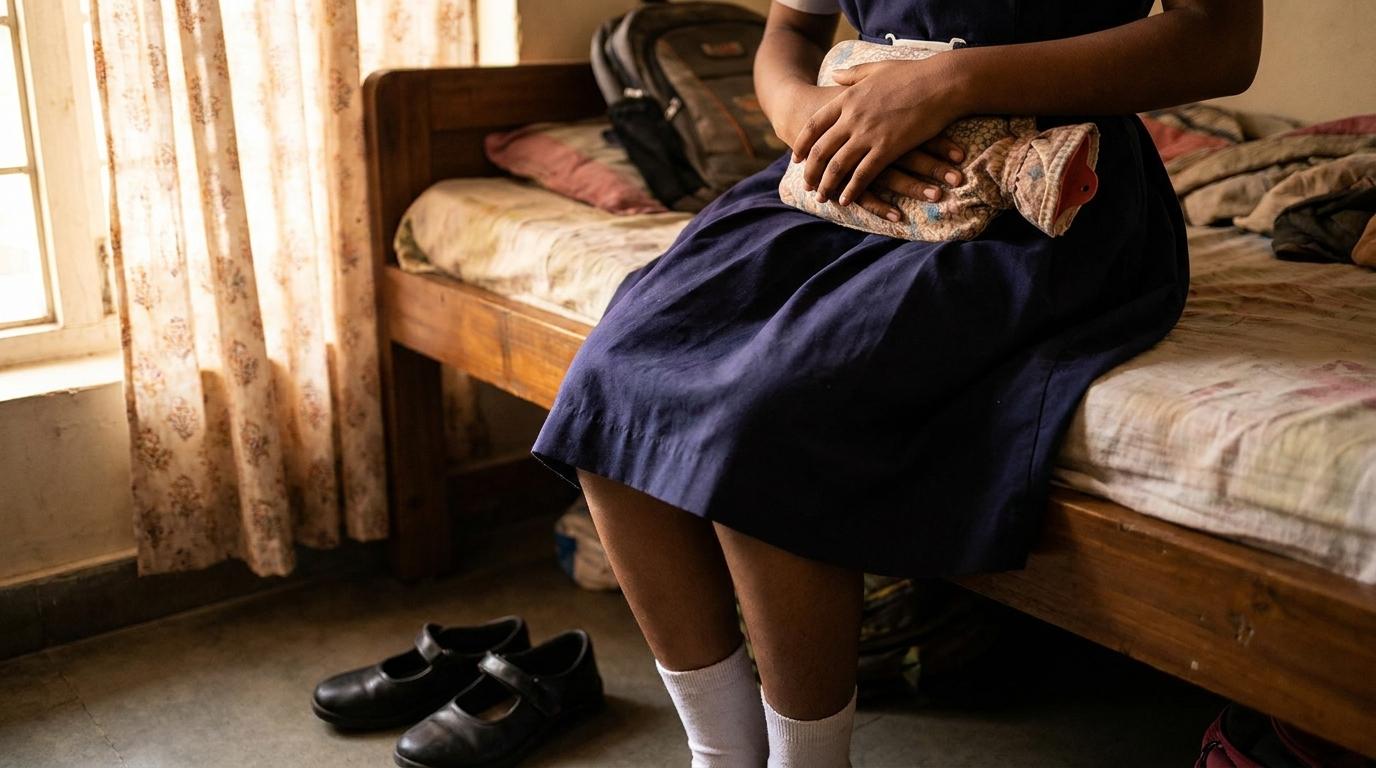
The girl is fourteen. Her periods began about eighteen months ago and have arrived at 38 days, then 22, then 45, then 30. Her mother has already decided it is PCOS, because a forward on the family WhatsApp group said so. The girl sits with her arms folded and says nothing at all.
This is the commonest menstrual complaint I see in teenagers, and most of the time nothing is wrong. Her body has started cycling before it has learned to ovulate reliably, and the result looks like chaos on a calendar.
Why the first two years look so uneven
Menarche in India usually arrives between 12 and 13, a little earlier in cities than in villages. Those early cycles are often anovulatory — no egg is released, no progesterone is made, and oestrogen runs the cycle on its own. Without that second hormone steadying the lining, bleeding can be light or heavy, early or late, sometimes ten days and sometimes six weeks apart.
A cycle anywhere from 21 to 45 days counts as normal in the first two years after menarche. Most girls settle into a 21 to 35 day rhythm by 16, some not until 18. So a 14-year-old, eighteen months in, with a 40-day gap is statistically unremarkable.
The number matters less than the pattern. Cycles sitting at 45 to 60 days apart for three straight years are worth investigating. Two odd months after a term of board exam stress and a bout of typhoid are not.
When it isn't just puberty
Some things do need ruling out, and a homeopath should be the first person to send you for a blood test rather than the last. PCOS genuinely occurs in teenagers, though it gets diagnosed far too readily from a single ultrasound. Thyroid trouble disturbs cycles. So does iron deficiency. A pale 15-year-old who is soaking pads and getting breathless on the stairs is anaemic until proven otherwise — NFHS-5 found close to 59 per cent of Indian girls aged 15 to 19 were anaemic, so this isn't a rare worry.
See a gynaecologist or paediatrician rather than a homeopath alone if any of these apply:
- No period at all by 15, or more than three years after breast development began.
- Cycles still consistently shorter than 21 days or longer than 45, three years after the first period.
- Bleeding lasting more than seven days, or soaking a pad in an hour.
- Period pain that keeps her home from school every month and doesn't ease with a hot water bag and a simple painkiller.
- Acne along with excess facial hair, rapid weight gain, or dark velvety patches on the neck — that combination needs a PCOS workup, not three months of remedies.
Notice what isn't on that list: a 16-year-old whose period came four days late. That's a Tuesday, not a diagnosis.
The acne is not a hygiene problem
By 14 or 15 the same androgens that drive puberty switch on the oil glands, and the chin, jawline and forehead start blocking up. It flares in the week before a period. It has nothing to do with how often she washes her face, and everything to do with what her skin is being told to do from inside.
What I do see is girls scrubbing with a rough cloth until the skin is red, dabbing toothpaste on a spot the night before a school photo, and being handed a fairness cream by an aunt. All three make it worse. Squeezing deep spots on the chin leaves pits that no remedy, homeopathic or otherwise, will fill in later. If the acne is nodular and already scarring, a dermatologist should see her — say that plainly and don't delay it for a constitutional course.
For the ordinary congested, oily, premenstrual kind, a homeopath looks at the whole girl rather than the face. Pulsatilla is classically indicated for a mild, tearful, changeable girl whose skin flares before each period and after rich food. Sulphur suits oily, burning skin that feels worse for washing and worse for heat. Graphites is considered where oily patches alternate with dry ones and blackheads cluster behind the ears. Kali bromatum has a long traditional use in deep nodular acne on chin and forehead, Natrum muriaticum where breakouts follow exam stress or a hurt she hasn't spoken about, and Hepar sulphuris where pustules are so tender she can't bear the pillow to touch them. None of these is "the acne remedy". The choice depends on her thirst, her sleep, her temperament, her cycle — and on a consultation, not an article.
Cramps: what genuinely helps
Period pain comes from prostaglandins making the uterus contract, which is why it usually peaks on day one or two and eases after. Heat works. So does not skipping breakfast, keeping iron and magnesium in the diet through dal, greens, jaggery and nuts, and walking a little even when she'd rather lie still.
Among remedies, Magnesia phosphorica is traditionally given where warmth and firm pressure relieve the pain and she doubles over. Colocynthis suits the same doubling-up picture with marked irritability. Belladonna fits throbbing pain that comes and goes abruptly and is worse for light and noise. Chamomilla is for the girl who is furious with everyone, flushed and hot. I'll be honest with you: the trial evidence for homeopathy in dysmenorrhoea is thin and of poor quality, and anyone who tells you otherwise is overselling. What I can say from clinic is that a good number of teenagers improve, and that the ones who don't improve at all after three cycles deserve a proper look for endometriosis — which does occur in teenagers and is routinely missed because everyone assumes periods are meant to hurt.
What a first consultation actually looks like
It runs 30 to 45 minutes and is mostly questions that seem unrelated to periods. How thirsty is she? Does she feel the cold? How does she sleep, and what does she dream about? Is she constipated? Does she sweat on the palms? How does she react when someone criticises her? The menstrual details matter, but they're a small part of the picture.
Follow-ups usually come every four to six weeks, and I'd give a constitutional remedy three to six months before judging it. Acne often takes longer than cramps. A mild early flare of the skin or a temporarily heavier period can happen in the first fortnight and usually settles; tell your homeopath rather than stopping.
Where homeopathy fits, and where it doesn't
This is supportive care, running alongside iron tablets, a dermatologist's opinion or a gynaecologist's scan — not instead of them. Don't stop prescribed iron because the remedy is working. Don't let a heavy, pale, exhausted bleed wait three months to see whether homeopathy helps. And if a girl is on the combined oral pill for a medical reason, that's a conversation with her doctor, not something to quietly drop.
For families who want to try this route, Hello Homeo offers video teleconsultation with homeopathic doctors, which matters here for a plain reason: a 15-year-old in a small town may not want to sit in a clinic waiting room while her father chats to the receptionist about why she's there. The other thing that helps is follow-up tracking, because acne and unsettled cycles are judged over months, not one visit, and a written record of what changed between consultations is worth more than memory.
Find a qualified homeopath who will take the history properly, ask for a haemogram and a thyroid test when they're needed, and tell you honestly when the answer isn't in the remedy box. That kind of practitioner is not hard to find, and your daughter is old enough to be part of the conversation.