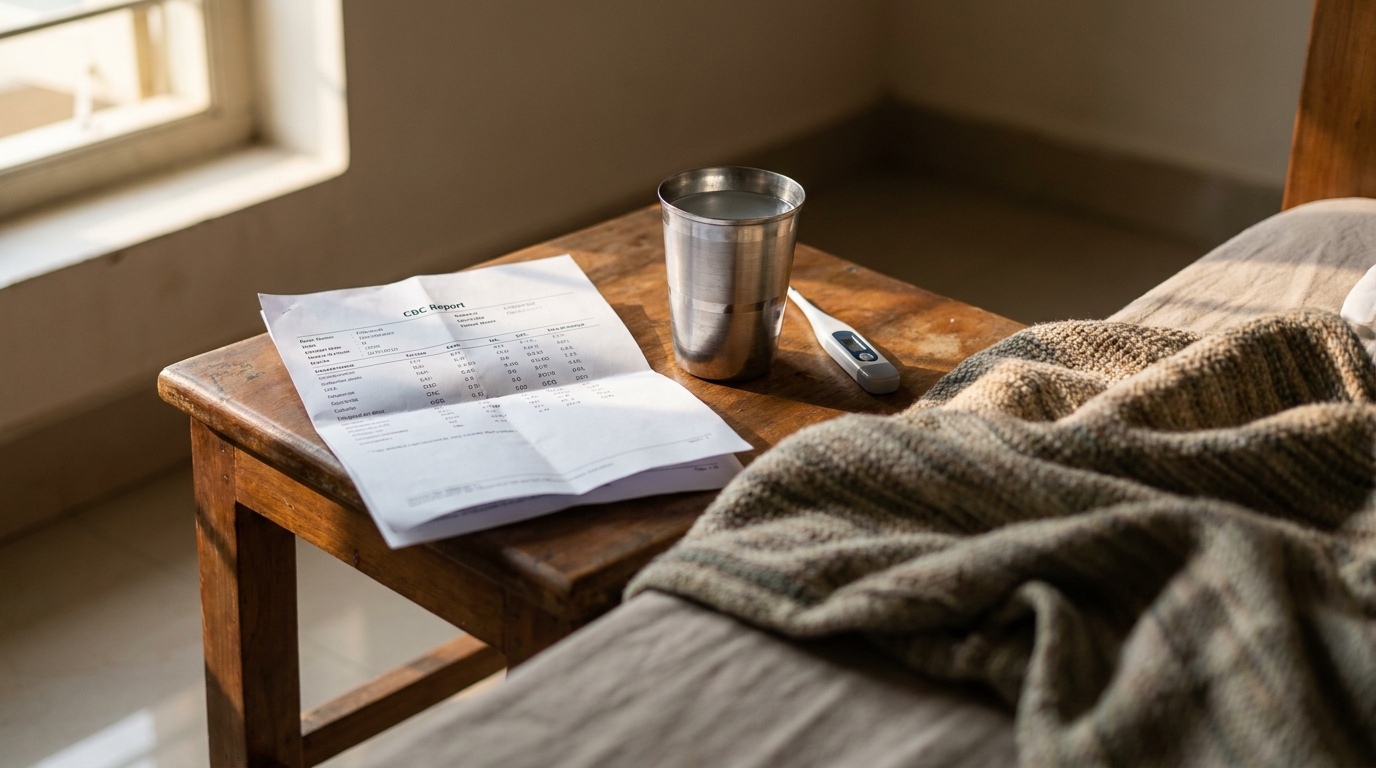
Most people expect to feel fine once their temperature drops. But if you have had dengue, chikungunya, or a severe seasonal viral fever, you know the real ordeal often begins right after the fever breaks. The thermometer finally reads normal, but your joints ache like they have been hit with a hammer. Standing up to brush your teeth leaves you completely drained, and your appetite is entirely gone.
Every monsoon and post-monsoon season, clinic waiting rooms fill up with people carrying files of daily complete blood count (CBC) reports. They have survived the acute phase of the infection, but they feel utterly broken. This post-viral fatigue is not in your head. Your immune system has just fought a massive battle, and the inflammatory markers left behind take time to clear out of your tissues.
The Line Between Medical Emergency and Recovery
Let us be entirely clear before discussing any remedies. Dengue is a serious, unpredictable viral infection that requires close medical monitoring. If your platelet count is dropping rapidly, if you have severe abdominal pain, persistent vomiting, or if you notice bleeding from your gums or nose, you need an allopathic hospital and immediate emergency care. Homeopathy does not replace IV fluids or emergency medical intervention during a dengue crisis.
Where homeopathy truly proves its worth is in the recovery phase. Once the critical danger has passed and you are discharged from the hospital, allopathy has very little left to offer beyond paracetamol for the pain and advice to rest. This is exactly where a carefully selected homeopathic remedy can help your body repair itself, clearing the lingering stiffness and lifting that heavy, dark exhaustion.
The Deep Bone Pain
Dengue is colloquially known as "break-bone fever", and anyone who has had it understands why. The pain does not feel like a normal muscle cramp; it feels deep inside the marrow. Patients often toss and turn in bed because they cannot find a comfortable position, yet moving actually makes the pain worse.
When a patient describes this specific type of deep, aching bone pain, a homeopath will often think of Eupatorium perfoliatum. This remedy is classically indicated when the bones feel as though they are broken. The patient might feel highly restless, but every movement brings a sharp reminder of the ache. Eupatorium is frequently considered for both dengue and chikungunya recovery when this bone-deep soreness simply refuses to leave, even weeks after the virus has cleared.
In other cases, the pain settles strictly into the joints and ligaments rather than the bones themselves. If you find that your knees, ankles, and lower back are incredibly stiff when you first wake up, but the pain eases slightly after you hobble around the house for ten minutes, the symptom picture points toward Rhus toxicodendron. This remedy is traditionally prescribed for stiffness that is worse on first movement and better with continued motion and warmth.
The Heavy, Shaking Exhaustion
Sometimes the pain is secondary, and the primary symptom is a profound, crushing weakness. You might notice your legs physically trembling when you try to walk to the bathroom. Your eyelids feel too heavy to keep open, and you lack the energy to even hold a conversation. You want to be left alone in a quiet room, and strangely, you have almost no thirst despite having had a high fever.
This specific combination of heaviness, dullness, trembling, and absence of thirst is the classic profile of Gelsemium sempervirens. It is one of our primary remedies for post-viral fatigue. Patients needing Gelsemium look visibly exhausted; their demeanour is sluggish, and they often describe feeling as though their muscles have turned to water.
Recovering from Fluid Loss
Viral fevers often bring heavy sweating, and sometimes they are accompanied by bouts of diarrhoea or vomiting. If your post-viral weakness is directly tied to a massive loss of body fluids, the indicated remedy often changes.
Cinchona officinalis, commonly known as China, is a remedy a homeopath will consider when exhaustion follows dehydration. Patients needing China often feel faint, their ears might ring, and they tend to be highly sensitive to drafts of air. They might also suffer from a bitter taste in the mouth and severe bloating, where their stomach feels full even after eating just two bites of rice.
The Platelet Question
It is impossible to talk about dengue without discussing platelets. Families understandably panic when they see the numbers drop on a lab report. Many Indians immediately turn to drinking raw papaya leaf juice. While the raw juice is notoriously bitter and often causes nausea in an already weak stomach, the homeopathic preparation of the same plant offers an alternative.
Carica papaya in its mother tincture form is widely used by homeopaths as supportive care to help the body stabilise and rebuild its platelet count naturally. It is gentler on the gastric system than the raw crushed leaves. However, it is vital to remember that platelets naturally take several days to rise once the viral load decreases. A remedy supports your system's natural capacity to produce them, but it cannot force an overnight spike if the virus is still actively suppressing your bone marrow.
Eating and Resting During Recovery
Your digestive system essentially goes to sleep during a severe viral fever. Trying to force heavy, oily, or highly spiced food too early will only lead to severe acidity and nausea.
- Stick to easily digestible foods like thin dal, kanji, and lightly cooked gourds for the first week.
- Hydration remains critical even after the fever stops. Tender coconut water helps replenish lost electrolytes without sitting heavily in the stomach.
- Do not rush back to work. Sitting at a desk under air conditioning while your body is still inflamed will often trigger a relapse of joint pain.
When you are dealing with post-dengue fatigue, the last thing you want is to navigate traffic on a two-wheeler or sit in a crowded waiting room just to see a doctor. Hello Homeo makes this easier by offering video teleconsultations and digital prescriptions, meaning you can speak directly with a qualified homeopath from your bed while you focus on resting.
Post-viral recovery is not a race. Your immune system has done the heavy lifting of clearing the virus, and now the tissues need time to heal. A carefully chosen homeopathic remedy, matched exactly to whether you are experiencing the restless bone pain of Eupatorium, the heavy trembling of Gelsemium, or the dehydration exhaustion of China, can gently speed up that repair process. Reach out to a homeopath, explain exactly how you feel, and let them help you rebuild your strength.