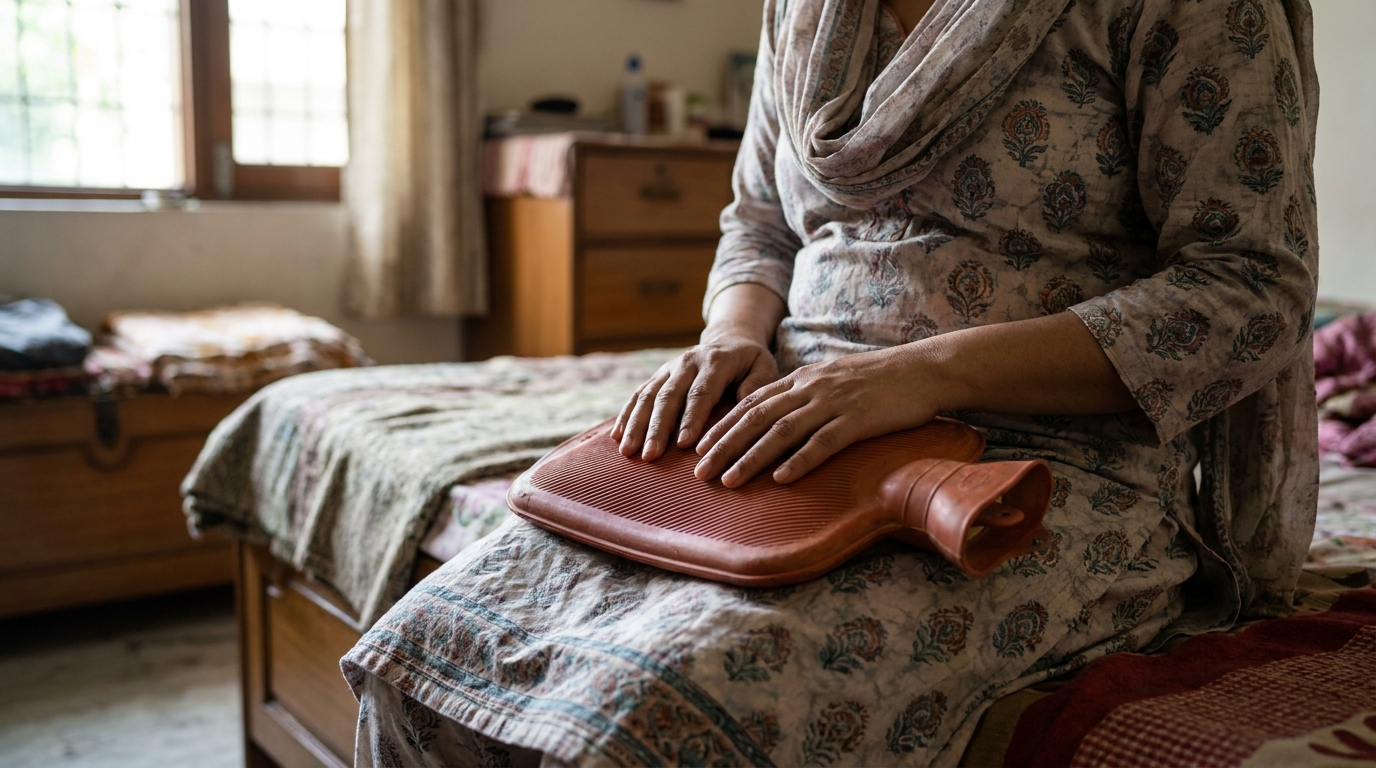
Many women in my clinic arrive holding an ultrasound report like it is a death sentence. The radiologist has typed out 'multiple uterine myomas' or 'fibroids' in bold letters. The immediate assumption is usually cancer, or that an operation must be scheduled by the end of the week. Neither is true. Fibroids are simply knots of smooth muscle tissue that grow in the wall of the uterus. By the time an Indian woman reaches fifty, there is a very high chance she has at least one.
We do not talk about heavy bleeding enough. Women living in joint families often hide the sheer volume of sanitary pads they go through each month. They push through the profound fatigue, assuming severe cramping and a heavy flow are just their lot in life. They grab a painkiller from the chemist's counter and keep going. But when a fibroid is driving that bleeding, ignoring it usually makes the problem worse.
Location matters more than size
Patients often fixate on the size of the fibroid. They will tell me they have a four-centimetre mass and ask if it is dangerous. But an ultrasound report requires context. A fibroid sitting completely on the outside of the uterus (subserosal) might grow to the size of a small grapefruit before you even notice it is there. It does not interfere with your menstrual flow at all. You might only notice it because it starts pressing on your bladder, making you feel the urge to urinate every time you hit a pothole on an auto-rickshaw commute.
Conversely, a tiny two-centimetre fibroid growing directly inside the uterine cavity (submucosal) can cause torrential bleeding. It acts like a foreign body inside the womb. The uterus tries to expel it, causing severe, labour-like cramps, and the surface of the fibroid bleeds heavily during your period.
What homeopathy actually does for fibroids
I need to be brutally honest here. If a patient comes in with an eight-centimetre fibroid expecting a month of homeopathic sweet pills to vanish it completely, I have to correct them. Homeopathy is not a surgical scalpel. We cannot simply dissolve a massive block of dense muscle tissue.
Our goal is clinical management. We aim to control the torrential bleeding, ease the pelvic heaviness, and work on the hormonal environment to arrest the fibroid's growth. Fibroids are fuelled by oestrogen. When we prescribe a constitutional remedy, we are aiming to regulate your body's overall endocrine balance. If a woman reaches menopause without the fibroid causing severe issues, her dropping oestrogen levels will naturally cause the fibroid to shrink. Homeopathy often serves as a bridge to get her there comfortably.
The symptom picture and the remedies
We do not have a single specific medicine for 'fibroids'. We have medicines for how your particular fibroid is behaving. A homeopath takes your specific symptom picture to find the right match.
Thlaspi Bursa Pastoris is frequently indicated when the bleeding seems endless. A woman might barely recover from one period before the next one begins. The bleeding is dark, accompanied by large clots, and leaves her feeling completely depleted. The cramping is intense, often described as a severe, grinding pain in the lower back.
Calcarea Carbonica is a deeply acting constitutional remedy. It is classically considered for women who are naturally chilly, easily tired, and prone to gaining weight. Their periods arrive too early, flow too profusely, and last far too long. A patient needing this remedy often has a history of poor calcium assimilation, perhaps sweating heavily on the head at night, and finds her periods leave her utterly exhausted.
Fraxinus Americana is sometimes called the homeopathic liquid scalpel, though that is a massive overstatement. It is, however, highly specific for a heavy, bearing-down sensation. The woman feels a constant downward drag in her pelvis, like her internal organs are going to fall out. The uterus is palpably enlarged, and there is often a chronic, watery vaginal discharge between periods.
Ustilago Maydis is considered when the bleeding is bright red and partly clotted, often forming long stringy clots. The bleeding is made worse by the slightest movement. Even getting up from a chair can cause a sudden gush of blood. There is often a distinct feeling of pressure in the cervix itself.
The toll of secondary anaemia
You cannot treat heavy bleeding in India without addressing anaemia. Our typical diets, heavily reliant on wheat and rice, already leave many women on the borderline of iron deficiency. Add a bleeding fibroid to this, and haemoglobin levels can plummet. When your haemoglobin drops to seven or eight grams per decilitre, you will experience breathlessness climbing stairs, hair fall, and a constant, crushing lethargy. Homeopathy can help stem the blood loss, but you must concurrently support your body with iron-rich foods like dates, jaggery, and dark leafy greens, or medical iron supplements if your doctor advises them.
When surgery is the right decision
There are clear red lines where homeopathic treatment must give way to conventional gynaecological intervention. If your bleeding is so severe that oral iron cannot keep your haemoglobin out of the danger zone, you may need surgical help. If a fibroid grows large enough to compress your ureters, it can cause irreversible kidney damage. If a fibroid on a stalk suddenly twists, cutting off its own blood supply, it will cause acute, agonizing pain that requires immediate emergency care.
Furthermore, if a fibroid suddenly begins growing very rapidly, especially in a woman who has already passed menopause, a gynaecologist must evaluate it to rule out malignant changes, though this is exceedingly rare.
Treating fibroids requires patience and precision. You cannot manage this by asking the local chemist for a generic bleeding remedy. Proper constitutional prescribing takes time and a detailed understanding of your medical history. You can use Hello Homeo to book a video teleconsultation with a qualified homeopathic doctor, which allows you to get a personalised treatment plan without the exhaustion of travelling to a clinic while heavily bleeding. The right remedy, chosen carefully, can often bring a chaotic menstrual cycle back into a manageable rhythm.