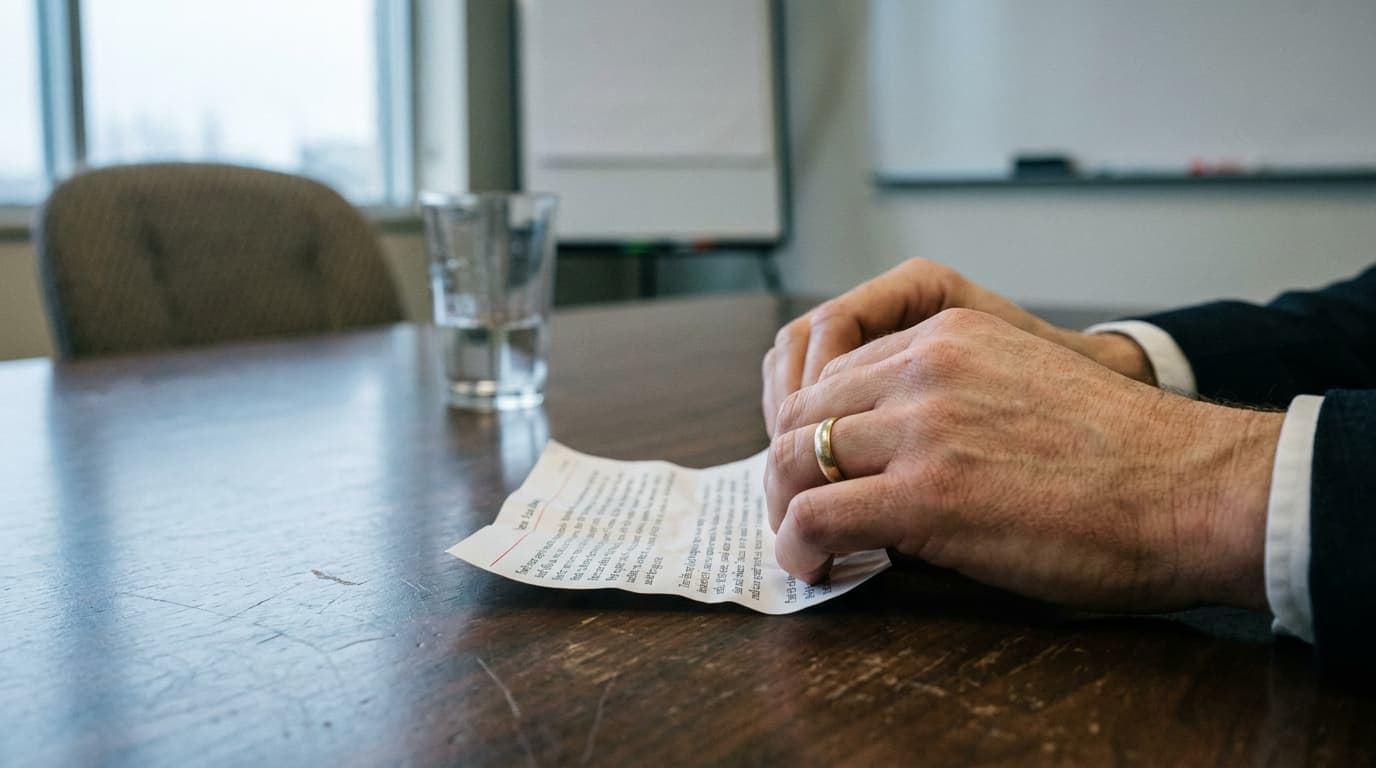
Your palms are leaving damp marks on your trousers, your throat feels like sandpaper, and your heart is beating hard enough that you're certain the person sitting next to you can hear it. You're next on the agenda to present the quarterly numbers. Or maybe you're just standing outside a brightly lit banquet hall in Delhi, dreading walking into your cousin's wedding reception because you'll have to speak to fifty relatives.
This physical dread is what patients describe when they sit in my clinic asking for help with social anxiety or fear of public speaking. They often feel intense shame about it. They watch colleagues breeze through presentations or family members chat effortlessly at large gatherings, and wonder why their own brain reacts to social attention as if it were a physical threat.
Conventional medicine frequently handles this with beta-blockers to stop the heart from racing, or SSRIs to dampen the background anxiety. Those have their place, especially when panic attacks are severe enough to stop you from functioning altogether. But many people look for an alternative because they dislike the side effects or feel blunted by daily medication. Homeopathy approaches this differently. We don't have one blanket remedy for anxiety. We look at exactly how your fear shows up in your body and mind.
The dread that builds for weeks
Consider the person who finds out they have to give a speech at an office offsite next month. From that minute, their peace of mind is entirely gone. They count down the days. They imagine everything that could go wrong. By the morning of the event, they're pacing the floor. They talk much faster than usual. Their nervous system targets their digestion, leading to frequent trips to the bathroom with loose stools. They just want the event to start so it can finally be over.
For this highly anticipatory, restless anxiety, a homeopath will often think of Argentum Nitricum. It is classically indicated when the fear is driven by a profound feeling of being rushed, accompanied by impulsive thoughts and nervous gastric symptoms.
The physical freeze
Then there is the opposite reaction. The anxiety doesn't make this person pace; it paralyses them. They might feel relatively calm until the very moment they have to step onto the stage or enter the room. Suddenly, their knees feel weak. Their hands tremble visibly. They develop a heavy, dull headache. Most distressingly, their mind goes completely blank, and everything they rehearsed vanishes.
Gelsemium is the remedy most frequently associated with this exact picture. It is perhaps the most famous homeopathic remedy for acute stage fright, performance anxiety, and interview nerves. The classic symptom picture involves profound physical weakness, trembling, and mental paralysis right before the event.
The fear of being found out
Sometimes the anxiety is deeply tied to a fear of incompetence. I see this often in people who have recently been promoted in corporate jobs in places like Gurugram or Hyderabad. They project immense confidence. They might even seem slightly arrogant or short-tempered to their juniors. But inside, they're terrified they'll be exposed as a fraud during a meeting or a presentation.
When they actually start speaking, they usually perform perfectly well, but the fear leading up to it is agonising. They might stumble over words or use the wrong syllables when stressed. Lycopodium is traditionally prescribed for this specific type of performance anxiety. The classical picture is a lack of self-confidence masked by a boastful exterior, where the fear is strongly linked to taking on new professional responsibilities.
Another remedy frequently considered for performance anxiety is Silicea. The patient who needs this actually knows their material inside and out. They're highly competent and detail-oriented. But they lack grit when faced with an audience. They're terrified of failing and being judged, leading to extreme nervousness before an exam or presentation. Unlike the Lycopodium patient who covers their fear with bluster, the Silicea type is mild, yielding, and openly anxious. They often sweat profusely on their hands and feet when put under pressure.
The overwhelm of the crowd
Social anxiety isn't always about standing at a podium. For many, the trigger is just mingling. Indian social life is notoriously crowded. If you live in a joint family or have a wide social circle, the sheer volume of mandatory interactions can be suffocating.
A patient needing Ambra Grisea finds the presence of other people unbearable. They're painfully shy, easily embarrassed, and feel completely drained by company. They might even find it impossible to have a bowel movement or sleep if someone else is in the house. Another remedy, Natrum Mur, is often considered for people who build a rigid wall around themselves. They're deeply sensitive to rejection or ridicule, they hate being consoled, and they avoid social events simply because they find it exhausting to maintain a socially acceptable facade.
Treatment takes time and exposure
A common misconception is that a few doses of a remedy will permanently switch off your anxiety. Constitutional homeopathic treatment takes time. A chronic tendency toward social dread has usually been building since childhood. Unravelling it requires a careful, long-term prescribing strategy aimed at your specific constitution.
More importantly, the remedies can't do the work alone. They lower the volume of the panic so you can actually tolerate being in the situation. If you take the medicine but continue to avoid every social gathering or refuse every chance to speak, your threshold for anxiety will never improve.
You have to pair the treatment with gradual exposure. I usually ask patients to build an exposure ladder. You write down the things that scare you and rank them. A typical progression for office anxiety might look like this:
- Turning your camera on for the entirety of a remote video meeting.
- Asking one prepared question during a team huddle.
- Speaking up to agree with a colleague's point in a larger meeting.
- Volunteering to present one single slide during a monthly review.
You stay at each step until it no longer causes a spike of panic, and only then do you move up. The goal is to teach your nervous system that the attention of others isn't actually dangerous.
Getting professional help
If social anxiety is making you isolate yourself completely, or if it is accompanied by deep depression, you should speak to a psychiatrist or a clinical psychologist. Cognitive Behavioural Therapy is highly effective for social phobias and works very well alongside homeopathy.
Don't try to treat chronic social anxiety by guessing at remedies from the internet. The subtle differences between needing Gelsemium or Lycopodium require an objective professional eye. If the idea of sitting in a crowded clinic waiting room fills you with dread, you can book a video consultation through Hello Homeo, which allows you to speak directly to a qualified homeopathic doctor and get a personalised treatment plan without leaving your house.
Stage fright and social anxiety can make your world very small. But with careful constitutional treatment, gradual exposure, and a bit of patience, you can stop avoiding life and start participating in it comfortably.