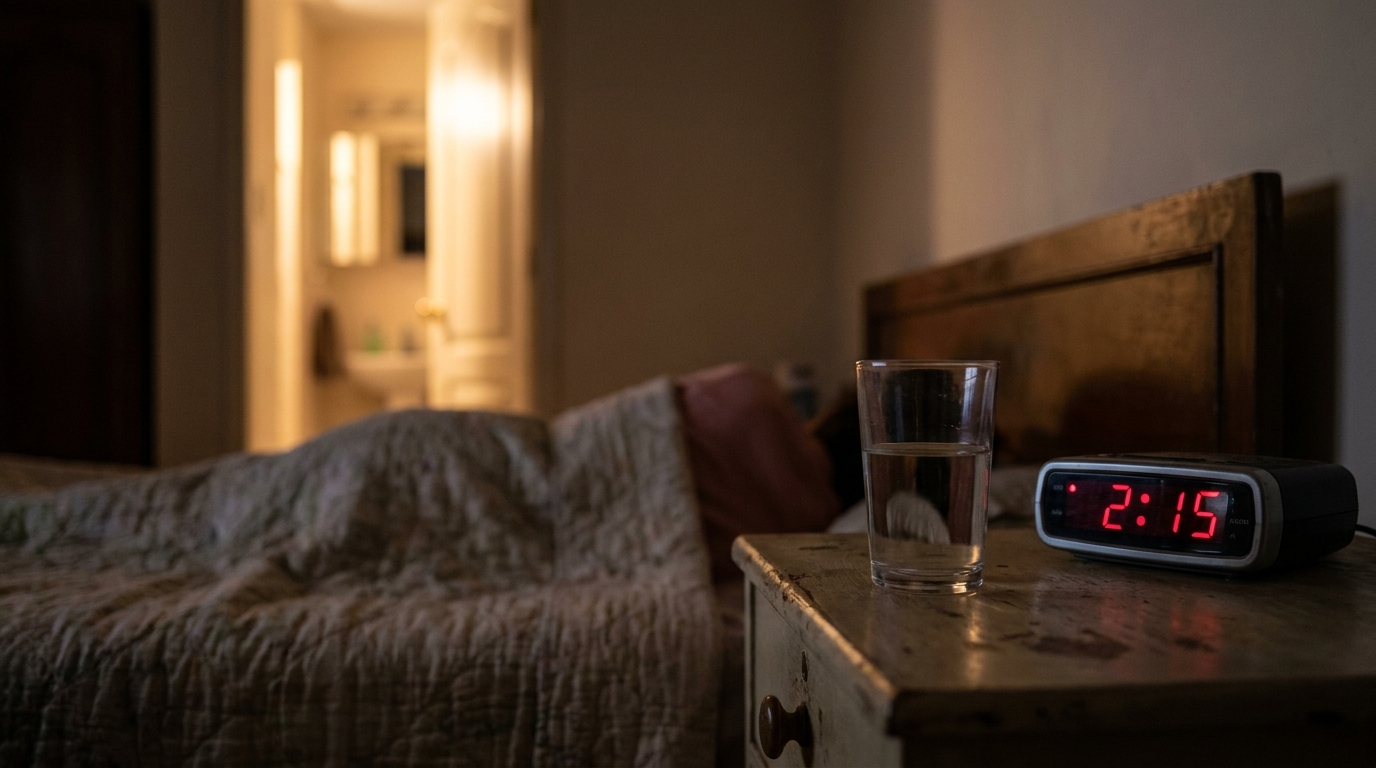
Most men over 50 know the routine. You wake up at 2 AM with a sudden, urgent need to pass urine. You get out of bed, careful not to wake your wife, and stand in the bathroom waiting for the stream to start. When it finally does, the flow is hesitant and weak. By the time you get back to bed, your sleep is broken. Two hours later, the urge hits again.
This is Benign Prostatic Hyperplasia, or BPH. In clinic, men often brush these symptoms off as an inevitable part of getting older. They adapt their entire lives around their bladder. They stop taking long bus journeys to their native village because they cannot rely on toilet stops. They decline the evening cup of chai. They mentally map out the washrooms at every wedding hall or market they visit.
The prostate is a small, walnut-sized gland that sits right under the bladder, wrapping completely around the urethra. As men age, this gland slowly grows. Think of it like someone resting their foot on a garden hose. The water still comes out, but the pressure drops, and the hose behind the foot swells up. The bladder has to work much harder to push urine through that narrowed gap.
Over time, the bladder muscle thickens. It becomes highly irritable, making you feel a sudden, intense need to urinate even when there are only a few drops of fluid inside. This is why you wake up multiple times a night.
The medical reality of an enlarged prostate
Homeopathy offers excellent supportive care for BPH, but we first need to know exactly what we are dealing with. A weakened stream and frequent urination are symptoms, not a diagnosis.
Before I prescribe any remedy for prostate issues, I ask patients to get two things. The first is an ultrasound of the kidney, ureter, and bladder (a KUB scan) that measures post-void residual volume. This tells us the exact size of the prostate gland in grams, and critically, how much urine is left sitting in your bladder after you try your hardest to empty it.
If you are retaining 150ml or 200ml of urine after voiding, that stagnant fluid becomes a breeding ground for bacteria, leading to recurrent urinary tract infections. Severe retention can even back up into the kidneys and cause permanent damage.
The second requirement is a PSA (Prostate-Specific Antigen) blood test. BPH is benign, meaning it is not cancer. However, prostate cancer can cause the exact same symptoms. A PSA test helps rule out malignant growths, giving us a clear, safe path to begin homeopathic treatment.
How homeopathy approaches BPH
A common misconception is that a homeopathic remedy will magically shrink a 60-gram prostate back to 20 grams in a matter of weeks. That is not how it works. BPH is a structural, mechanical change.
What homeopathic remedies do is reduce the inflammation, congestion, and irritability of the prostate and the surrounding bladder tissue. When the gland is less swollen and angry, the urethra opens up slightly. The bladder stops spasming over tiny amounts of urine. You sleep longer stretches at night, and the stream regains some of its force. We are treating the symptoms and improving your quality of life.
Conventional medicine often relies on a 'watchful waiting' approach for mild BPH, before moving to alpha-blockers that relax the bladder neck. Homeopathy fits perfectly into this watchful waiting phase. Instead of doing nothing while the symptoms slowly worsen, we can actively manage the discomfort.
Remedies classically indicated for prostate symptoms
A homeopathic prescription relies on the specific way your symptoms present. Ten men with the exact same ultrasound report might need ten different remedies.
Sabal serrulata is perhaps the most heavily prescribed remedy for prostatic enlargement. It is traditionally indicated when the primary complaint is constant, frustrating night-time urination. The patient often reports a sensation of coldness in the bladder or a dull ache in the perineum.
Conium maculatum is considered when the main issue is an interrupted stream. The urine flows, stops entirely, and then starts again a few seconds later. This stop-and-start pattern is highly characteristic of the remedy. The patient often feels that they have not finished, but simply cannot force the rest out.
Chimaphila umbellata presents with severe difficulty initiating the flow. A man needing this remedy often finds he cannot urinate at all unless he stands with his feet wide apart and leans his body forward. There is a distinct feeling of a heavy ball sitting in the perineum.
Lycopodium is routinely used when urinary symptoms are paired with severe digestive complaints. These patients usually suffer from loud flatulence, bloating, and acidity. They often complain of a heavy, dragging backache right before they need to pass urine, which magically disappears the moment the bladder is empty.
Clematis erecta is used for the dribbling that happens after you think you have finished. The flow is incredibly slow, often just a trickle, and the patient finds their undergarments get wet after they leave the washroom because the urethra is still slowly emptying.
When surgery becomes necessary
Honesty is required when treating structural problems. Homeopathy has limits.
If a patient suddenly finds they cannot pass a single drop of urine despite a bursting, painful bladder, this is acute urinary retention. It is a medical emergency. You need to go to a hospital casualty ward immediately to have a catheter inserted. You do not need a homeopathic remedy in that moment; you need mechanical relief before your kidneys are damaged.
Similarly, if a prostate has grown massively large and is completely obstructing the bladder neck, causing repeated infections and bleeding, conventional surgery is necessary. Procedures like TURP (Transurethral Resection of the Prostate), where a surgeon shaves away the inner portion of the gland, are sometimes the only way to restore normal flow. Homeopathy can help speed up recovery after such surgeries, but it cannot replace them when a solid physical blockage exists.
Managing the condition at home
Remedies work best when you stop aggravating the bladder. Stop drinking water two hours before you go to sleep. If you take medication for blood pressure, check with your cardiologist if it contains a diuretic, and ask if you can take it in the morning rather than at night.
Avoid suppressing the urge to pass urine. Many men in India hold it in for hours during train journeys or long commutes in heavy traffic. Stretching an already weakened bladder muscle makes retention much worse.
Keep your lower body warm. Sudden exposure to cold weather, especially cold drafts hitting the lower abdomen, frequently triggers acute urinary retention in men with BPH. Limit caffeine and alcohol, as both actively irritate the bladder lining and increase urine production.
Prostate issues carry a heavy, unspoken emotional weight. Many older men feel embarrassed to discuss their urinary habits, hiding the problem from their families until it becomes severe. Through Hello Homeo, you can book online video consultations with qualified homeopathic doctors, allowing you to explain your symptoms privately from your own home and receive digital prescriptions. A proper constitutional prescription takes into account your thermal preferences, your digestion, and your emotional state, providing care that treats you as a whole person, not just a swollen gland.
Do not wait until the symptoms dictate your entire daily routine. Get your blood tests and scans done, take your reports to a professional homeopath, and start managing the condition early.