The clinical reality of delayed cycles
Women sit across from my clinic desk every week, frustrated that their periods are still fifty days apart. They take their prescribed homeopathic doses regularly, but the weight refuses to budge and dark chin hair keeps appearing. When we look at what they ate over the previous seven days, the physical obstacle usually reveals itself: plates piled high with white rice, meals consisting of three wheat rotis with a tiny bowl of dal, and sweet milky tea twice a day. No homeopathic remedy can out-work a diet that constantly spikes your blood sugar.
Many patients come to homeopathy after years of relying on oral contraceptive pills to force a withdrawal bleed. They want a permanent, natural resolution. Homeopathy approaches Polycystic Ovary Syndrome by treating the individual constitution, aiming to correct the underlying hormonal disturbance rather than just suppressing the symptoms. But those remedies require a cooperative metabolic environment to do their job. If your daily meals are triggering massive insulin surges, you are throwing petrol on the exact fire the remedy is trying to put out.
The insulin and testosterone connection
Almost all women with PCOS deal with insulin resistance, even if they are visibly thin. You can think of insulin as a hormone that unlocks the door to your cells, allowing energy from your food to enter. In a body with PCOS, these cellular locks are stiff. The pancreas panics and pumps out more and more insulin to force the doors open.
The ovaries are highly sensitive to this flood of insulin. When exposed to high levels of it, they react by producing excess testosterone. That excess male hormone is what stops the ovaries from releasing an egg, causing cystic follicles to form on the surface. It also triggers the severe cystic acne along the jawline and the male-pattern hair growth that patients find so distressing. If you do not lower the insulin, the testosterone stays high.
Why the remedy needs a quiet metabolism
When a homeopath takes your case, we look for your specific, highly individualised symptom picture to find a constitutional match. We are looking for the exact way your body expresses its imbalance.
If you are someone whose periods are always late and scanty, who feels worse in a warm, stuffy room and tends to cry easily when explaining your symptoms to the doctor, a homeopath may consider Pulsatilla. If you have heavy brownish pigmentation across your nose and cheeks, experience a dragging down sensation in your pelvis, and feel completely exhausted and irritable with your family members, Sepia is classically prescribed.
For women who gain weight easily around the lower abdomen, feel chilly in all weather, sweat heavily on their scalp during sleep, and crave boiled eggs, Calcarea Carbonica might be indicated. If your PCOS is accompanied by severe right-sided ovarian pain, massive bloating after eating even a small amount of food, and intense sugar cravings in the late afternoon, a homeopath will often look at Lycopodium.
These remedies are chosen to nudge your endocrine system back toward normal function. But if you eat a massive plate of upma for breakfast, you flood your bloodstream with glucose. The insulin spikes, the testosterone follows, and the remedy has to fight against an active, diet-induced hormonal surge. The diet is the foundation. The remedy is the architect. You cannot rebuild a house if the ground keeps shaking.
Rethinking the Indian plate
Telling an Indian woman to simply stop eating carbohydrates is useless advice. Our entire food culture, especially in joint families where meals are cooked for six or eight people at once, is built on a heavy base of rice and wheat. The trick is changing how you eat them. You have to focus on the glycaemic index, which is simply a measure of how fast a food turns into sugar in your blood.
You also have to change the proportions on your plate. A traditional lunch often features a mountain of rice or three rotis, accompanied by a small serving of vegetables and a little dal. To manage PCOS, you must flip this ratio entirely. The protein and the fibre must become the main event, and the carbohydrate should be the side dish. Eating your vegetables and protein first, before touching the carbohydrate, actually blunts the glucose spike in your blood.
Practical swaps for daily meals
You do not need an expensive, imported keto diet. You just need to modify the foods already sitting in your kitchen pantry.
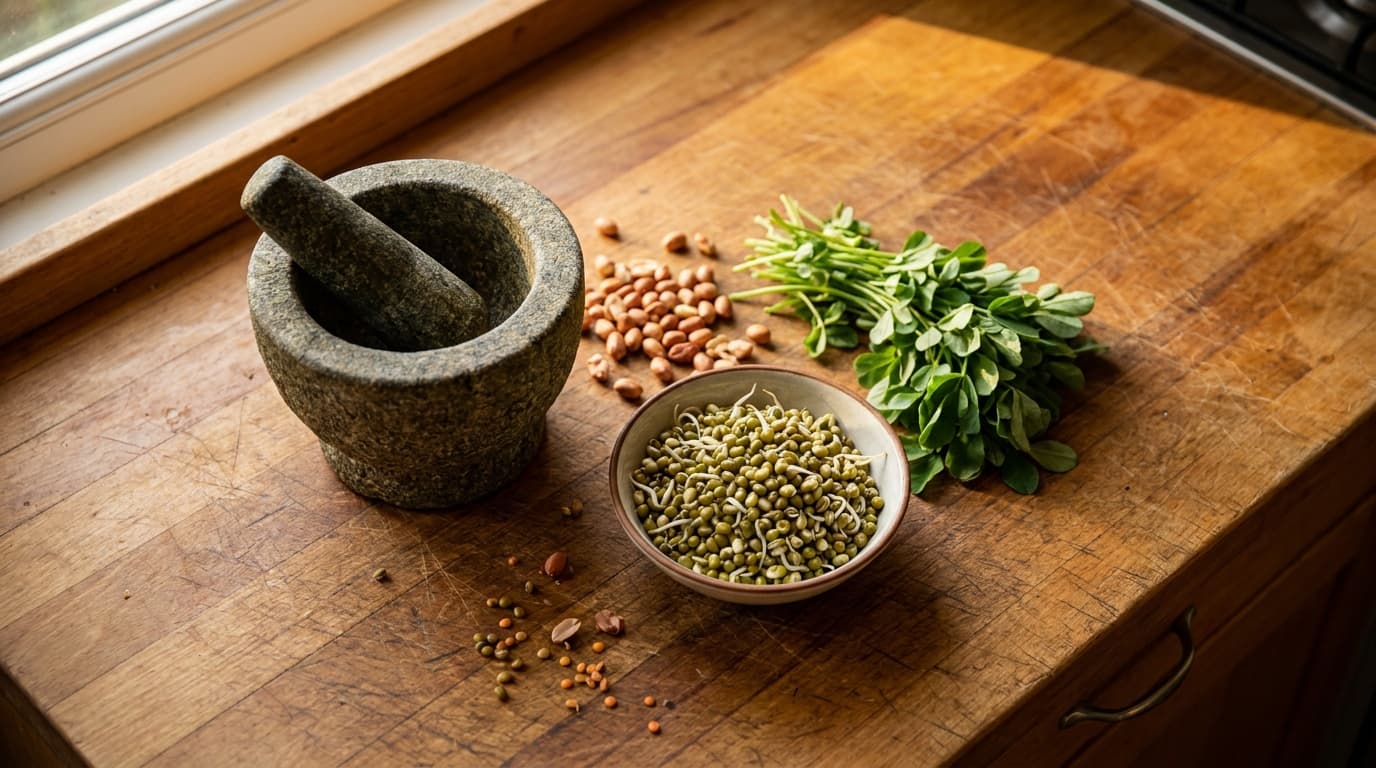
- Breakfast: Skip the plain poha, upma, or white idlis. These digest instantly and spike your sugar. Try besan chilla, moong dal dosa (pesarattu), or eggs cooked with vegetables. If you must have poha, halve the usual amount and mix in an equal quantity of sprouted moong and roasted peanuts.
- Lunch: Instead of regular wheat rotis, switch to jowar, bajra, or ragi, which have more fibre and digest slower. Have just one or two small rotis, but double your intake of dal, chana, or rajma. Add a massive portion of seasonal sabzi like bhindi, cabbage, or beans.
- Snacks: This is where the 4 PM sweet tea and glucose biscuits ruin the day's hard work. Swap the biscuits for a handful of roasted makhana, ten raw almonds, or a glass of spiced buttermilk. If you need tea, have it without sugar or use a tiny pinch of jaggery, though even jaggery is ultimately sugar to your body.
- Dinner: Keep the last meal of the day light and eat it at least two hours before sleeping. A thick vegetable and dal soup, paneer tikka with capsicum, or a small portion of dalia (broken wheat) cooked with twice its volume in vegetables.
The reality of the timeline
Patients often ask how quickly the cysts will disappear. PCOS is stubbornly slow to change because you are trying to reverse years of metabolic habit. A typical course of homeopathic treatment for this condition runs for six to twelve months before cycles regulate naturally and stay regular without intervention. You will usually notice your energy levels improving and your sugar cravings dropping in the first few weeks, but the physical changes to the ovaries take time.
It is strictly necessary to mention that if you experience severe, sudden lower abdominal pain that doubles you over, you need to see a conventional doctor for an ultrasound immediately. This type of acute pain can indicate a large ovarian cyst that has ruptured or twisted on its stalk, which requires urgent medical assessment, not a homeopathic remedy.
Because treating PCOS requires constant adjustment as your body changes over these months, having regular access to your homeopath makes a massive difference. Through Hello Homeo, you can book online consultations with homeopathic doctors and receive personalised treatment plans that evolve as your symptoms shift. This allows your doctor to easily track your cycle changes, adjust the remedy potency when your periods begin to return, and monitor your progress without you having to navigate city traffic for every follow-up visit.
Your daily food choices and your homeopathic prescription do two different jobs. The low-glycaemic meals stop adding fuel to the hormonal fire. The constitutional remedy helps your body remember how to ovulate and regulate its own cycles again. Treating this condition is a matter of removing the dietary obstacles while addressing the internal weakness. When you get the food right, you give the homeopathic treatment a fair and clear field to work.