The mistake of starving your skin
I see this scenario play out in my clinic almost every week. A young woman sits across my desk, her face broken out in painful cystic acne, and tells me she eats nothing but boiled moong dal and plain rice. She stopped drinking milk months ago. She avoids ghee, spices, nuts, and any kind of sweet. Her skin hasn't improved, but her hair is thinning, her periods are irregular, and she is constantly exhausted.
When you have a chronic skin condition like severe acne or weeping eczema, the desperation to fix it makes you ruthless with your diet. You read online that dairy causes acne, so you cut it out. You read sugar feeds eczema, so you stop eating fruit. Very quickly, you end up malnourished, which impairs your skin's ability to heal the very lesions you are trying to prevent.
Food absolutely affects the skin. But skin does not react or heal overnight. Stripping your Indian diet bare without understanding exactly how specific foods interact with your sebaceous glands and immune system usually just leaves you miserable. We need to be specific about what we remove, how long we remove it for, and how homeopathic treatment fits into this picture.
The three main dietary triggers
In homeopathic practice, we treat the patient, not just the disease label. But a remedy has a hard time working if you are putting petrol on a fire three times a day. For acne and eczema, there are three common dietary aggravators in the typical Indian diet.
Milk and heavy dairy
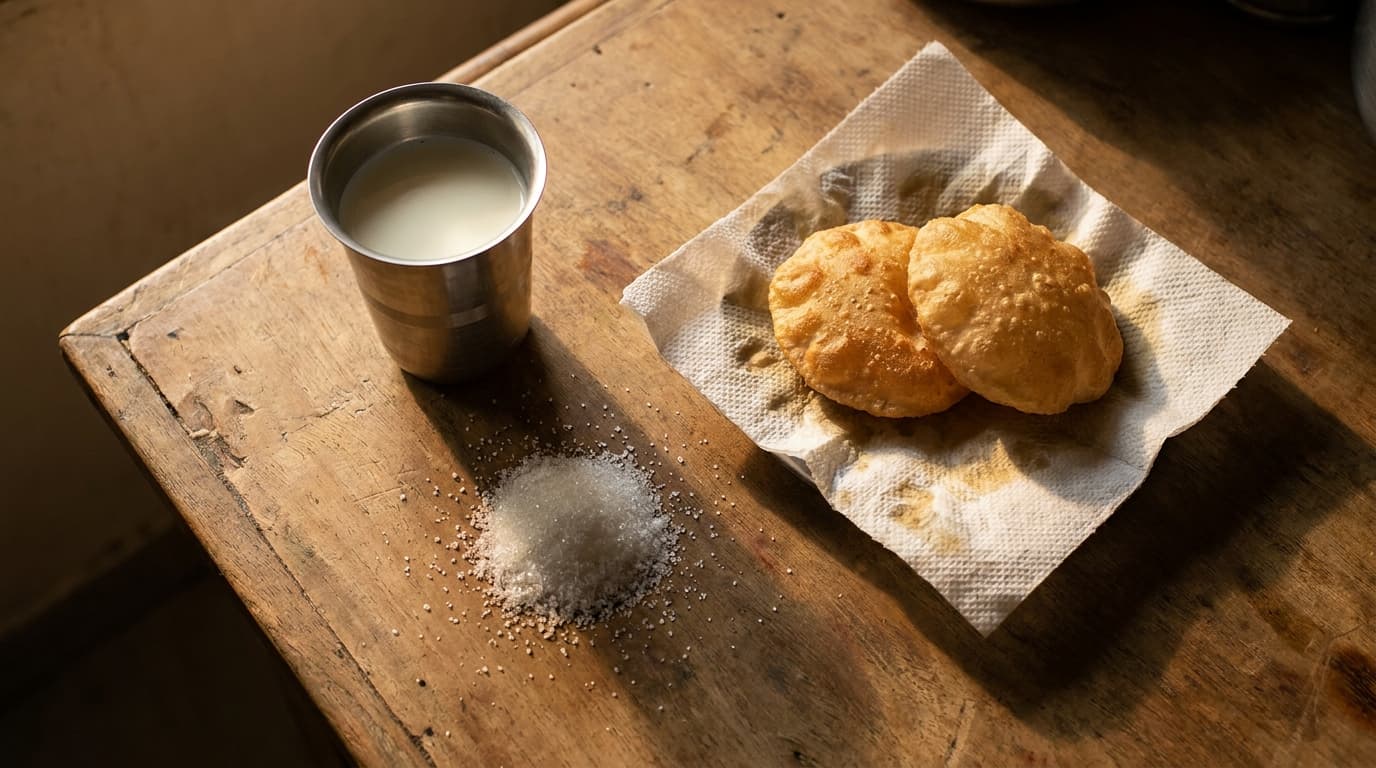
Dairy is an emotional subject in India. A mother will insist her teenager drinks a tall glass of milk every morning for strength, or push heavy paneer curries on a child with eczema to help them gain weight. But for reactive skin, dairy can be a massive obstacle to cure.
It is not usually a lactose issue. Lactose intolerance causes bloating and diarrhoea. Skin problems are more often driven by the proteins in cow and buffalo milk, specifically casein and whey. These proteins stimulate the production of IGF-1 (Insulin-like Growth Factor 1) in your liver. High IGF-1 signals your skin's sebaceous glands to go into overdrive, producing thick, sticky sebum that blocks pores and feeds acne-causing bacteria.
If you have deep, blind pimples along your jawline and chin, milk, malai, and thick curds are often the culprits. Ghee and butter, however, are mostly fat with very little protein, and many acne sufferers tolerate them perfectly well.
High-glycaemic carbohydrates and hidden sugars
When we talk about sugar, patients immediately think of gulab jamun and chocolate. But your body treats a massive heap of white rice or a plate of maida pooris very similarly to dessert.
Foods with a high glycaemic index spike your blood sugar rapidly. Your body responds with a surge of insulin to bring that sugar down. These frequent insulin spikes trigger androgen hormones, which again tell your skin to produce excess oil and increase inflammation. This is why a diet heavy in refined carbohydrates often leads to dull, congested skin that refuses to clear up.
For eczema sufferers, high sugar intake feeds the low-grade systemic inflammation that keeps the skin red, itchy, and hyper-reactive to environmental triggers like dust or monsoon humidity.
Refined seed oils
Over the last few decades, Indian kitchens have largely shifted away from traditional fats like mustard oil, cold-pressed coconut oil, and ghee, replacing them with cheap, highly refined sunflower, soybean, or vegetable oils.
These refined oils are heavily skewed toward omega-6 fatty acids. While we need some omega-6, consuming it in massive quantities throws off our ratio of omega-3 to omega-6. This imbalance promotes inflammatory pathways in the body. If you suffer from atopic dermatitis or eczema, cooking all your meals in refined seed oils gives your body the exact building blocks it needs to maintain that chronic inflammation.
How to run a trial elimination
Do not cut everything out on a Tuesday morning. If you remove dairy, sugar, wheat, and oil all at once and your skin improves, you will have no idea which food was actually causing the problem. You will also struggle to eat enough calories.
Pick one category. Dairy is usually the best place to start for acne, while refined sugars and oils are good starting points for eczema. Remove that single category strictly for four weeks. Skin cell turnover takes roughly 28 days, so a one-week trial tells you absolutely nothing.
Replace the calories you remove. If you stop eating paneer, eat more chana or tofu. If you cut out white rice, replace the volume with jowar, bajra, or complex vegetables. If your skin significantly improves after four weeks, you have identified a trigger. If there is zero change, you can reintroduce that food and test the next category.
Where homeopathy comes in
Dietary elimination is management. It stops you from triggering the flare-up. But a healthy human body should theoretically be able to eat a bowl of curd or a piece of jaggery without breaking out in boils or shedding skin. The goal of a homeopath is to address the underlying susceptibility.
We use constitutional remedies chosen based on your specific physical and emotional makeup. For instance, a homeopath might prescribe Calcarea Sulphurica for someone suffering from deep, cystic acne that produces thick yellow pus and takes weeks to heal, leaving deep scars. This patient often runs hot and feels worse in warm rooms.
Alternatively, Pulsatilla is frequently indicated for teenage girls whose acne flares up dramatically around their menstrual cycle, especially if they have a known intolerance to rich, fatty foods like heavy cream or fried snacks. They tend to be thirstless and crave open air.
For eczema, Graphites is a classic remedy when the skin cracks behind the ears or between the fingers, oozing a sticky, honey-like fluid. These patients often suffer from chronic constipation and find their skin worsens if they eat rich sweets or fats. Sulphur, on the other hand, is considered when the skin is excessively dry, red, and intensely itchy, especially at night when the person gets warm in bed. They often have a strong craving for sweets and spicy foods, which they digest poorly.
Constitutional homeopathic treatment is slow work. It takes time to reduce the body's hypersensitivity. When you are tracking these gradual changes in eczema or acne over several months, booking an online consultation through Hello Homeo allows you to check in with your doctor over video, showing them your skin's progress without taking half a day off work to travel to a clinic. You get your digital prescription immediately, making the long-term management of chronic skin issues much easier to maintain.
If you are struggling with skin that rules your life, stop starving yourself. Do a methodical four-week elimination of one likely trigger, observe the changes, and consult a qualified homeopath to start treating the root sensitivity.