The first visit runs ninety minutes, and the ovaries barely come up
The woman in this article is a composite. She's stitched together from the sort of PCOS case that turns up in a homeopathy clinic in Pune or Indore most weeks — not any one patient, and no detail belongs to a single person. Call her 27, working at a design studio, forty minutes each way on a scooter.
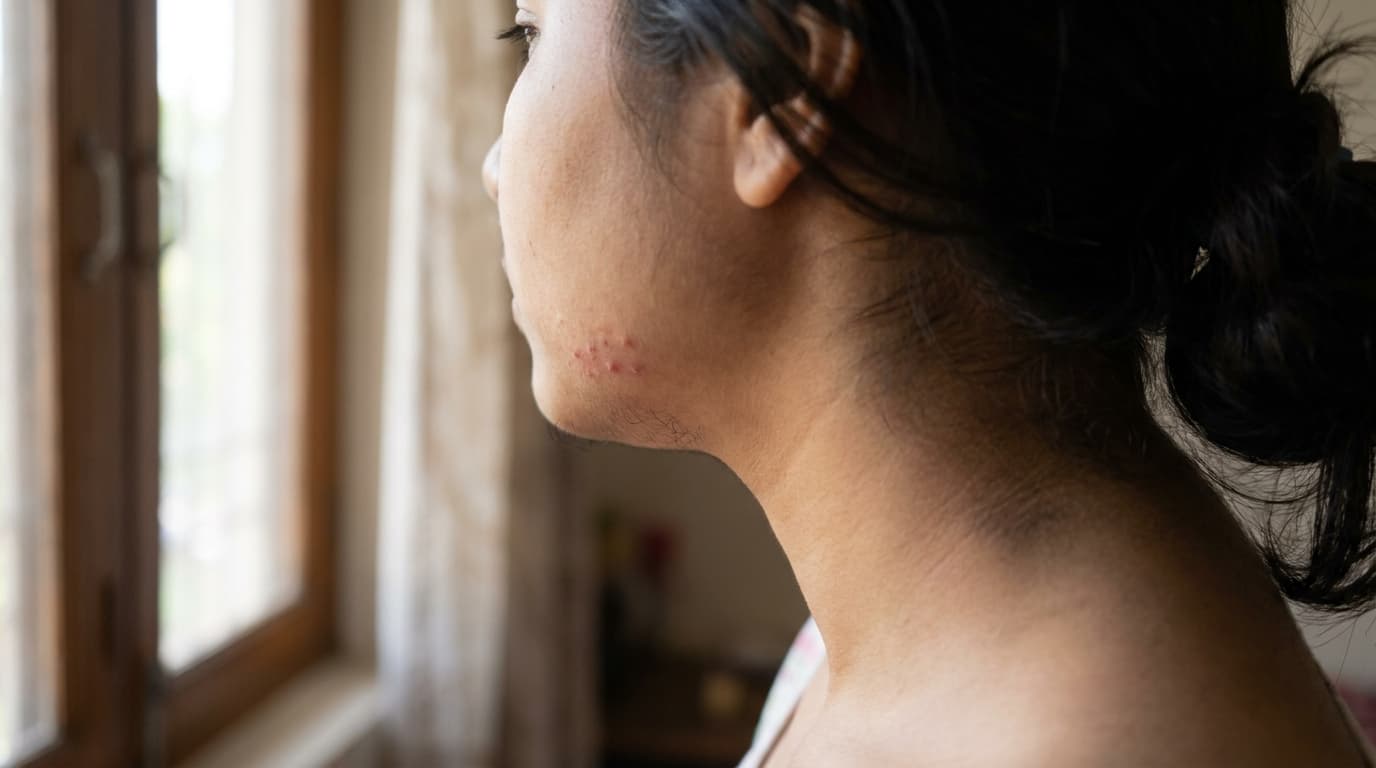
Her periods have never been tidy. At 15 they came every two or three months. By 22 she was diagnosed and put on a combined pill, which she took for three years — regular cycles, clear skin, and a withdrawal bleed every month that felt like a period but wasn't one. Off the pill, everything stretched back out to 50 days. Her chin and upper lip need threading every ten days. There's a line of cystic acne along the jaw that flares the week before a bleed, and a patch at the back of her neck that's darker and slightly velvety, which she assumed was dirt that wouldn't come off in the bath. Hair comes out in the shower in quantities that frighten her. Six kilos have settled around her middle in two years, and the 4pm craving for something sweet has hardened into a ritual. She sleeps at one in the morning and wakes unrefreshed.
Her last bloods: TSH normal, HbA1c 5.7, vitamin D at 12 ng/mL, fasting insulin at the higher end of the range. An ultrasound reads "multiple small peripheral follicles, both ovaries". Indian studies put PCOS at somewhere between 9 and 20 per cent of women of reproductive age, depending on which criteria you use, so she is not unusual in the waiting room.
The first consultation is not fifteen minutes. It's closer to an hour and a half, and a good half of it has nothing to do with ovaries.
She'll be asked how much water she actually drinks and whether she's thirsty at all. What she craves and what she can't stand the smell of. How the period itself behaves — clots, colour, odour, whether the pain comes before the flow or after, whether a hot bath eases it. What she's like in the three days before: tearful, snappy, wanting company, wanting to be left alone. Whether her feet are cold at night, which side she sleeps on, what she dreams about. Her mother's diabetes, her sister's thyroid.
- Thirst — none, or large quantities at a time, or constant sips.
- Cravings and aversions: salt, sweets, eggs, sour things, milk.
- The period itself: clots, odour, timing of pain, effect of heat.
- Mood in the days before the bleed.
- Thermal state — chilly or overheated, and where on the body.
- Family history of diabetes, thyroid disease, PCOS.
None of that is small talk. Two women with identical scans leave with different medicines, and the difference comes from this.
There is no "PCOS remedy"
This surprises people. Homeopathy doesn't have a drug for polycystic ovaries. It has a few hundred remedies, and the prescriber matches the whole picture — cycle, skin, temperament, thermal state.
A few of the pictures that come up repeatedly in this kind of case. Pulsatilla where periods are late, scanty and changeable, and the woman is tearful, thirstless, better in open air and worse in a warm room. Sepia where there's a bearing-down feeling as though everything would fall out, irritability with a strong wish to be left alone, chilliness, sallow skin. Natrum Muriaticum in the reserved woman who cries alone and never in front of anyone, with headaches before the period and a real craving for salt. Calcarea Carbonica for the chilly, sweaty, easily tired build where weight goes on easily and periods are late and heavy. Lycopodium when there's bloating from 4 to 6pm, a sweets craving, and quiet anxiety underneath a competent exterior. Where a cyst is actively painful and stinging and worse for heat, Apis is sometimes considered.
The starting potency is usually a single dose of 30C or 200C, then wait. No daily repetition for weeks, and no changing the remedy every ten days because nothing happened in a fortnight. Follow-ups sit four to six weeks apart and the remedy is reassessed against what actually moved.
Months one to three: changes that arrive before the cycle does
The first thing that shifts is usually sleep. She's asleep by 11.30 without effort and waking less foggy. The 4pm sweet craving softens around week five.
Week three or four often brings a small aggravation — a crop of spots along the jaw, a little white discharge, an old symptom she'd forgotten about. It settles on its own. In a first course this is common and not a reason to panic or stop.
Her period in month two still arrives at day 48. Nobody should read anything into that.
Months four to six: the cycle starts to move
Month four gives a 39-day cycle. Month five, 35. Month six, 36. Flow is less clotted and the premenstrual low is shorter by a couple of days.
One thing to hold on to: a regular bleed does not prove the cysts have gone. Ultrasound findings can lag behind symptoms by months, and in some women the ovarian appearance barely changes while everything else improves. Chasing a clean scan is the wrong target.
Months seven to twelve: what holds, and what stubbornly doesn't
Hair fall improves slowly, because the hair cycle runs in months. Expect three to four months before the shower drain looks different. Jawline acne fades first; chin and lip hair last. Being honest, coarse facial hair often doesn't change at all with treatment, and threading or laser stays the practical answer.
Weight: three to four kilos down across the year in this composite, and most of it came from her own changes — poha instead of two parathas, a walk after dinner, less ordering in. That matters more than the remedy does. Losing 5 to 7 per cent of body weight is the most reliable way to bring ovulation back, and no medicine substitutes for it.
Where homeopathy stops and something else has to start
PCOS in most Indian women is driven largely by insulin resistance, and homeopathy does not measure or manage that. If HbA1c is climbing, if fasting insulin is high, if there's velvety darkening at the neck, the plan has to include diet, resistance training and sometimes metformin — prescribed by a physician, not a homeopath. Coming off the pill abruptly without a plan is the other common mistake; do it with the doctor who started it.
See a gynaecologist rather than waiting it out if:
- You've had no bleed for three months. The lining needs to be shed; this is a real risk, not something to sit on.
- You're trying to conceive and nothing has happened in twelve months, or six if you're over 35.
- Bleeding is very heavy, or there's bleeding between periods or after sex.
- Facial hair appeared fast, or weight is dropping without trying — that needs endocrine investigation.
What to ask before you begin
Ask any homeopath you consult how long the first assessment will take, how often they want follow-ups, and what they'd count as progress at three months. Ask whether they'll work alongside your gynaecologist. Anyone who promises a cure in six weeks, or tells you to throw away your metformin, is worth walking away from. Homeopathy here is supportive care. It sits alongside the rest, not in place of it.
Hello Homeo is useful for the part of PCOS care that's hardest to keep up: an online consultation with a homeopathic doctor fits around a working day, and follow-up tracking keeps cycle dates, skin changes and sleep from six weeks ago in front of the doctor at the next appointment instead of being half-remembered. That continuity is most of the value when the timeline is this long.
Every case is constitutional and none of this can be prescribed from an article — the remedy that suited this composite woman could be wrong for you by a wide margin. If you've carried a PCOS diagnosis for years and gone round and round with the pill, a proper consultation with a qualified homeopath is a reasonable next step, taken alongside your gynaecologist rather than instead of them.